











A Fort Worth truck accident lawyer starts with the truck driver, the company that put the truck on the road and the records that company has to keep. Semi trucks, delivery trucks, dump trucks and tankers share Fort Worth roads with local traffic.
Zinda Law Group offers a free case review of your truck accident at (800) 863-5312.
Article summary
Key things to know
- Federal rules require covered trucking companies to hold on to driver logs, repair records and a qualification file for each driver.
- A personal injury lawsuit in Texas has a filing deadline, and claims against Fort Worth generally require earlier written notice.
- Federal rules generally cap a property-carrying truck driver at 11 driving hours inside a 14-hour window.
- Texas had 699 large trucks in fatal crashes in 2024, more than any other state, according to NHTSA.
Free case review
Crashed with a delivery truck or a semi?
Start with what you remember about the truck. A lawyer can explain which company records matter and which deadline you face.
What a Fort Worth truck accident lawyer does
Fort Worth truck accident lawyers handle injury claims against truck drivers and the trucking companies behind them. A claim can also reach the owner of the trailer, the company that loaded it and the shop that kept the truck running.
After a serious accident, the work starts with a letter. It asks the company responsible for the truck to keep the truck, the electronic logs, the truck data and the driver’s file. That evidence can show what the truck driver and the truck were doing before the crash.
The attorney then builds the claim from the police report, the medical record and proof of lost income. Each offer from the insurance company is weighed against those losses. Insurance adjusters make the offers, and each decision to accept or refuse one belongs to the client.
Accident reconstruction experts may help explain crashes that the crash report leaves unclear, and that work can strengthen a truck accident claim. A Fort Worth truck accident lawyer can tell you what your legal matter needs now and what can wait.
Truck traffic on Fort Worth roads
The Census Bureau’s July 1, 2025 estimates put about 1,028,000 people in Fort Worth and about 2,248,000 in Tarrant County.
TxDOT calls I-35W a major national trade corridor with daily truck volumes averaging 11 percent. The highway runs through the city, Haslet and Burleson.
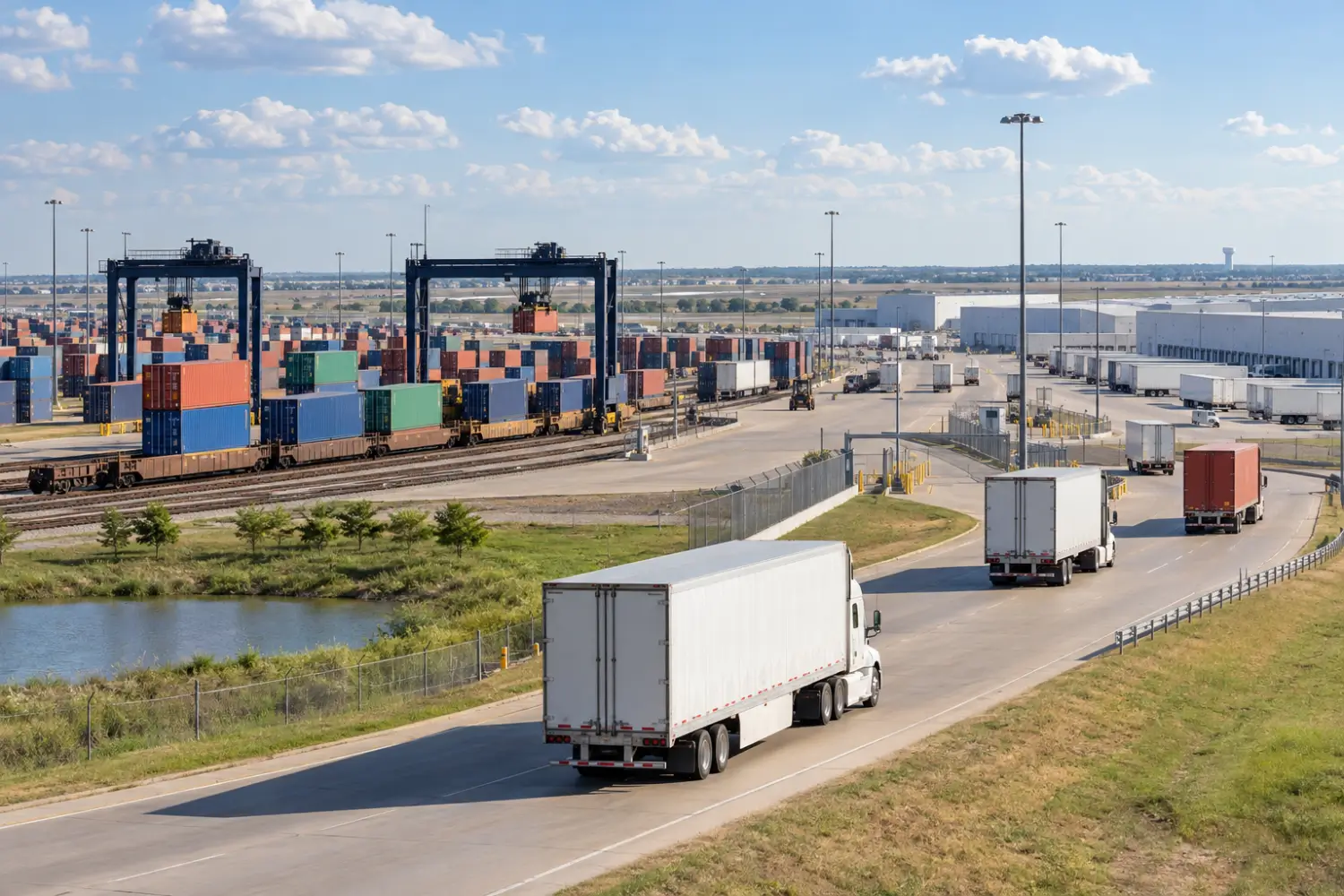
City streets have limits of their own. Under the City Code, a commercial motor vehicle, truck-tractor, trailer or semi-trailer passing through with no local stop must use streets designated as truck routes. A through truck off those routes can matter to fault, one of the city accident law insights after a truck crash.
Fort Worth and Tarrant County crash figures
TxDOT counted 15,680 reportable crashes in the City of Fort Worth in 2025. 109 were fatal crashes in which 112 people died, and 562 people had a suspected serious injury. That table counts every kind of vehicle and has no truck column.
For crashes involving commercial vehicles, TxDOT publishes a county table. It recorded 2,183 crashes involving commercial vehicles in Tarrant County in 2025 and 1,716 in 2024. Fifteen of the 2025 crashes were fatal, with 16 deaths, and 71 people had a suspected serious injury.
The county table covers reportable crashes the officer marked with the CMV indicator, as processed by TxDOT. It takes in more than semi trucks and says nothing about who was at fault.
Truck crash figures for Texas and the United States
The National Highway Traffic Safety Administration (NHTSA) counts medium and heavy trucks rated over 10,000 pounds, commercial or not, excluding buses and motor homes. Its figures are not comparable to the TxDOT counts above.
NHTSA reports that 5,340 people were killed in traffic crashes involving large trucks in the United States in 2024, and it estimates that 161,201 more were injured. Seventy percent of the people killed in those crashes were in the other vehicle.
Texas had more large trucks in fatal crashes in 2024 than any other state, 699 of them, according to NHTSA. In the United States as a whole, large trucks were 9 percent of the vehicles in fatal crashes that year while making up 5 percent of registered vehicles.
Types of truck accidents in Fort Worth
Trucking cases in Fort Worth involve many kinds of commercial truck, and truck crashes with each kind look different. The type of truck can point to which company ran it and which rules apply to commercial drivers.
Semi trucks and tractor trailers
Loaded semi trucks pulling a trailer can far outweigh the cars around them. Trailer ownership and load weight are common questions in a Fort Worth 18-wheeler accident claim involving a tractor trailer or big rig.
Delivery trucks and vans
A Fort Worth Amazon truck accident claim may require identifying the driver’s employer and the companies that operate the van.
Dump trucks, tankers and other commercial vehicles
Dump trucks, garbage trucks, tow trucks and tankers count as commercial vehicles. So do many pickups and vans used for work. The Texas statute on commercial vehicle lawsuits covers a vehicle used for commercial purposes to carry property or passengers, deliver goods or provide services. A vehicle used at the time for personal, family or household purposes does not count.
Buses
A Fort Worth bus accident can injure riders. The same Texas statute generally excludes passengers, except those who work for the vehicle’s owner, lessor, lessee or operator.
How a truck accident case differs from a car accident case
A truck accident case can involve more defendants and more records than a car accident case. Different companies involved may employ the truck driver, own the trailer and load the freight. Car wrecks between privately used passenger cars generally lack these trucking records, and a Fort Worth car accident may involve fewer defendants.
Truck crashes and car wrecks also differ in size. The Federal Motor Carrier Safety Administration (FMCSA) puts a fully loaded tractor-trailer at up to 80,000 pounds, and it says that weight raises the risk of severe injuries and deaths.
FMCSA also lists how trucks move differently from cars.
- Large blind spots around the truck
- Stopping distances up to the length of two football fields
- Right turns that may start with a move to the left
- Underride, a crash behind a truck that can push a car under it
Common causes of truck crashes in Fort Worth
Serious crashes often have more than one cause. A Fort Worth truck accident attorney checks the person behind the wheel, the trucking company and the truck itself.
Driver fatigue and long hours
Federal rules limit how long a truck driver may drive. A covered driver of a property-carrying truck generally may drive up to 11 hours, inside a 14-hour window that starts on coming on duty after 10 consecutive hours off. A 30-minute break is generally required before driving past 8 hours of driving time.
Depending on the carrier’s schedule, a driver generally may not drive after 60 hours on duty in 7 days or 70 hours in 8 days. Federal rules also generally bar driving while fatigue or illness makes it unsafe, and they bar a carrier from requiring or permitting it.
For drivers in Texas intrastate commerce, a Texas rule generally allows 12 hours of driving after 8 consecutive hours off duty and bars driving after 15 hours on duty.
Distracted and reckless driving
Speeding, tailgating, unsafe lane changes and phone use can all show unsafe driving. In a truck, the weight makes each mistake more dangerous for oncoming traffic and the other drivers nearby.
Cargo that shifts or spills
A driver may operate a commercial truck only with the cargo properly distributed and adequately secured. Cargo must also be secured to prevent shifting that affects the truck’s stability. A load that shifts can point to the truck driver, the carrier or the company that loaded the truck.
Poor maintenance and equipment failure
A motor carrier must systematically inspect, repair and maintain the trucks it controls. On each truck it controls for 30 consecutive days or more, it must keep maintenance records for one year and for six months after the truck leaves its control. Drivers generally must report safety defects they find or are told about after each day’s work. A blown tire after skipped inspections can leave the carrier or its repair shop answering for 18-wheeler tire failure.
Federal and Texas rules for trucking companies
The Federal Motor Carrier Safety Administration regulates commercial trucking and writes its safety rules. Texas tells the Department of Public Safety to adopt truck safety rules consistent with federal rules, and a Texas rule adopts many of the federal rules by reference.
Who may drive a commercial truck
Under federal rules, a commercial truck driver must generally be at least 21, be physically qualified, be able to drive the truck safely and hold a valid license from one state. A carrier may not let an unqualified person drive.
Hours records and driver files
Federal rules require motor carriers to have truck drivers log hours on an electronic logging device, with exceptions such as qualifying short-haul drivers and trucks made before model year 2000. The carrier then has to hold on to those logs for six months or more. A motor carrier must also keep a qualification file for each driver it employs, generally while the driver works for it and for three years after.
Post-crash drug and alcohol tests for truck drivers
After a fatal crash involving a commercial truck on a public road, the employer generally must test a surviving driver who was performing safety-sensitive functions with that truck for alcohol and drugs. Testing is also required after certain nonfatal crashes involving immediate medical treatment for injuries away from the scene or disabling vehicle damage requiring towing. The driver must also receive a moving violation citation arising from the crash within 8 hours for alcohol testing or 32 hours for drug testing.
Insurance coverage minimums
A for-hire carrier hauling general freight in interstate commerce in a truck rated at 10,001 pounds or more must carry at least $750,000 in financial responsibility. For covered oil and hazardous-material carriers, federal minimums are $1,000,000 or $5,000,000, depending on the regulatory category.
Carriers that must register in Texas need liability insurance in an amount set by the Texas Department of Motor Vehicles. TxDMV lists $500,000 as the minimum in its general category, for carriers with trucks over 26,000 pounds, and some cargo requires more. A minimum coverage figure is not what a claim is worth. The federal minimums are the same in every state our truck accident lawyers cover.
Evidence in a Fort Worth truck accident case
Lawyers who handle a truck accident case build trucking cases on records from the trucking companies and the scene.
- The police report and any photos from the crash scene
- Electronic logging device data
- Truck data from the engine and safety systems
- Maintenance records and daily inspection reports
- The truck driver’s qualification file and drug and alcohol test results
- Witness statements and video from nearby businesses
- Your medical bills and treatment notes
Some records after a truck wreck have retention periods measured in months, so a lawyer seeks preservation early. Electronic logs document driving hours, and engine data may help establish speed, both forms of truck accident case evidence.
Who can be held liable for a Fort Worth truck accident
A truck crash can have more than one responsible party. Potentially responsible parties include the people and companies listed below.
- The truck driver, for speeding, distraction, fatigue or an unsafe lane change
- The trucking company, for its driver’s negligence within the scope of employment or for its own negligence, such as poor maintenance
- A loader or shipper, for cargo that was not secured
- A maintenance company or repair shop, for work that failed
- A truck or parts manufacturer, for a defect that played a part
In a Texas truck accident lawsuit, the jury or judge assigns a percentage of responsibility to each claimant, defendant, settling person and designated responsible third party, as the evidence supports. A liable defendant generally pays only its own share. A defendant assigned over half of the responsibility is also jointly and severally liable. The truck’s data may help establish truck accident fault.
Texas fault rules after a truck accident
Texas uses a modified comparative fault rule, called proportionate responsibility in the statute. An injured person whose share is 50 percent or less can still recover, but the damages are reduced by that person’s percentage.
Adjusters for the insurance company often argue that the other driver shared the blame. Fort Worth truck accident lawyers answer that argument with the logs, the engine data and the scene evidence in a Texas truck accident claim.
Filing deadlines
Questions about how much time you have?
Deadlines for a truck accident claim in Fort Worth
| Claim | General deadline | Source |
|---|---|---|
| Personal injury lawsuit | Two years from the day the claim accrues | Tex. Civ. Prac. & Rem. Code 16.003 |
| Wrongful death lawsuit | Two years from the death | Tex. Civ. Prac. & Rem. Code 16.003 |
| Written notice of an injury claim to the city | 180 days from the injury | City Charter, Chapter XXVII, Section 25 |
Each rule has exceptions.
A claim against the City of Fort Worth has a shorter first step. The city charter requires written notice to the City Council, and late notice needs good cause.
The notice must describe the injury and its date, place and cause. It must also give the amount of damages, the amount for which the claimant would settle, the claimant’s residence address and the names and addresses of the witnesses relied on.
The charter drops that requirement for a city that had actual notice of the injury within the same period, which a lawyer can confirm. On its own claim form, the city says to file with Risk Management.
Under the Texas Tort Claims Act, a city can be liable for injuries caused by an employee’s negligent use of a motor vehicle within the scope of employment, subject to limits and exceptions. A city’s liability for bodily injury or death is limited to $250,000 for each person and $500,000 for each occurrence. The same state statutes govern a Texas truck accident claim in each of the five counties Fort Worth spans.
Truck accident injuries
A crash with a heavy truck can cause serious injuries that need long medical treatment. These can include traumatic brain injuries, spinal cord injuries, broken bones and severe burns.
A head injury can look mild at the scene, so the first of the steps after a brain injury is a medical exam. Harm to the spine can mean paralysis and years of care, the work of the firm’s spinal injury lawyers. The firm’s Fort Worth brain injury lawyer team and Fort Worth spinal cord injury lawyers take those cases in the city.
Losses a truck accident claim can cover in Texas
After a truck crash, accident victims can pursue compensation from trucking companies and other responsible parties for what the crash cost them.
- Physical impairment, pain and mental anguish
- Medical expenses now and future medical care
- Wages lost during recovery and lost earning capacity
- Property damage, including the vehicle
Texas law sorts these losses into economic damages, such as medical costs and lost income, and noneconomic damages, such as pain and suffering and mental anguish. Recovery of medical expenses already incurred is limited to the amounts actually paid or incurred.
Exemplary damages are the Texas name for punitive damages. They take clear and convincing proof of fraud, malice or gross negligence, and a Texas statute caps them with some exceptions. The value of a truck accident claim depends on proven losses, fault, legal limits and available coverage.
Fatal truck accidents and wrongful death claims in Fort Worth
After a fatal truck crash, a Texas wrongful death claim benefits the surviving spouse, children and parents. The injured person’s own personal injury claim also survives the death, for the heirs, legal representatives and estate.
Who may bring each claim is a question for a truck accident lawyer, because wrongful death cases follow their own Texas statute. Survival and Fort Worth wrongful death claims often run side by side after one crash.
Courts that hear Fort Worth truck accident cases
Fort Worth sits in five counties, which are Tarrant, Denton, Johnson, Parker and Wise. The parties and the facts decide the court for a truck accident lawsuit.
Tarrant County lists ten civil district courts, all in the Tom Vandergriff Civil Courts Building downtown. Tarrant County lies in the Fort Worth Division of the U.S. District Court for the Northern District of Texas, which sits in the Eldon B. Mahon U.S. Courthouse.
What to do after a truck accident in Fort Worth
- Get medical treatment. See a doctor promptly, even with no pain at first, and follow the treatment plan.
- Call 911. A law enforcement officer may write a crash report that records the truck and the carrier.
- Gather evidence. Photograph the scene, the damage and the company name on the truck’s door.
- Exchange information. Get the truck driver’s name, registration and insurance details.
- Keep your records. Save repair estimates, pay stubs and proof of missed work.
- Wait on recorded statements. The trucking company’s insurer may call quickly after a truck accident, so talk to a truck accident attorney first.
Dealing with the trucking company’s insurer
The insurance company for the carrier may send adjusters within days of a serious accident involving a big truck. A first settlement offer can come in low, before the full cost of the injuries is known. Until the claim resolves, the injured person’s own health coverage may pay first, which leaves open who is ultimately responsible for medical bills. An early recorded statement can later be used to argue that the injured person shared the blame.
A Fort Worth truck accident lawyer can take those calls and deal with the insurance company for accident victims.
When you are ready
Talk through the next step.
Call a Fort Worth truck accident lawyer for free
The initial consultation is free, and our free case evaluation page takes your details online. A lawyer can go over the crash, the records and the deadline with you, and explain the entire process.
Zinda Law Group is a law firm with an office at 5601 Bridge St, Suite 300, Fort Worth, TX 76112. Our Fort Worth personal injury lawyers handle other personal injury claims. The firm also has medical malpractice lawyers and dog bite attorneys for claims in the city. Zinda Law Group also has Arlington truck accident lawyers for that Tarrant County city and Dallas truck accident lawyers to the east.
Our firm works on a contingency fee basis, so there is no out-of-pocket cost to secure the legal representation you need. That’s our No Win, No Fee Guarantee.
Founder and CEO
John C. (Jack) Zinda
Jack founded Zinda Law Group and focuses his practice on catastrophic personal injury, 18-wheeler accidents and wrongful death.