



Most buses on Florida roads are run by a public body. A county transit authority, a school district, a municipal system or a regional authority is a subdivision of the state. That single fact decides more about a bus accident claim than the crash itself does. It sets a ceiling on what can be paid. It removes some categories of damages entirely. It adds a written step that has to be completed before a lawsuit can be filed at all.
A claim against a private charter company follows ordinary negligence rules. A claim against a public transit agency does not. Working out which one applies is the first thing a Florida bus accident lawyer does, because the answer changes the deadline you are working to.
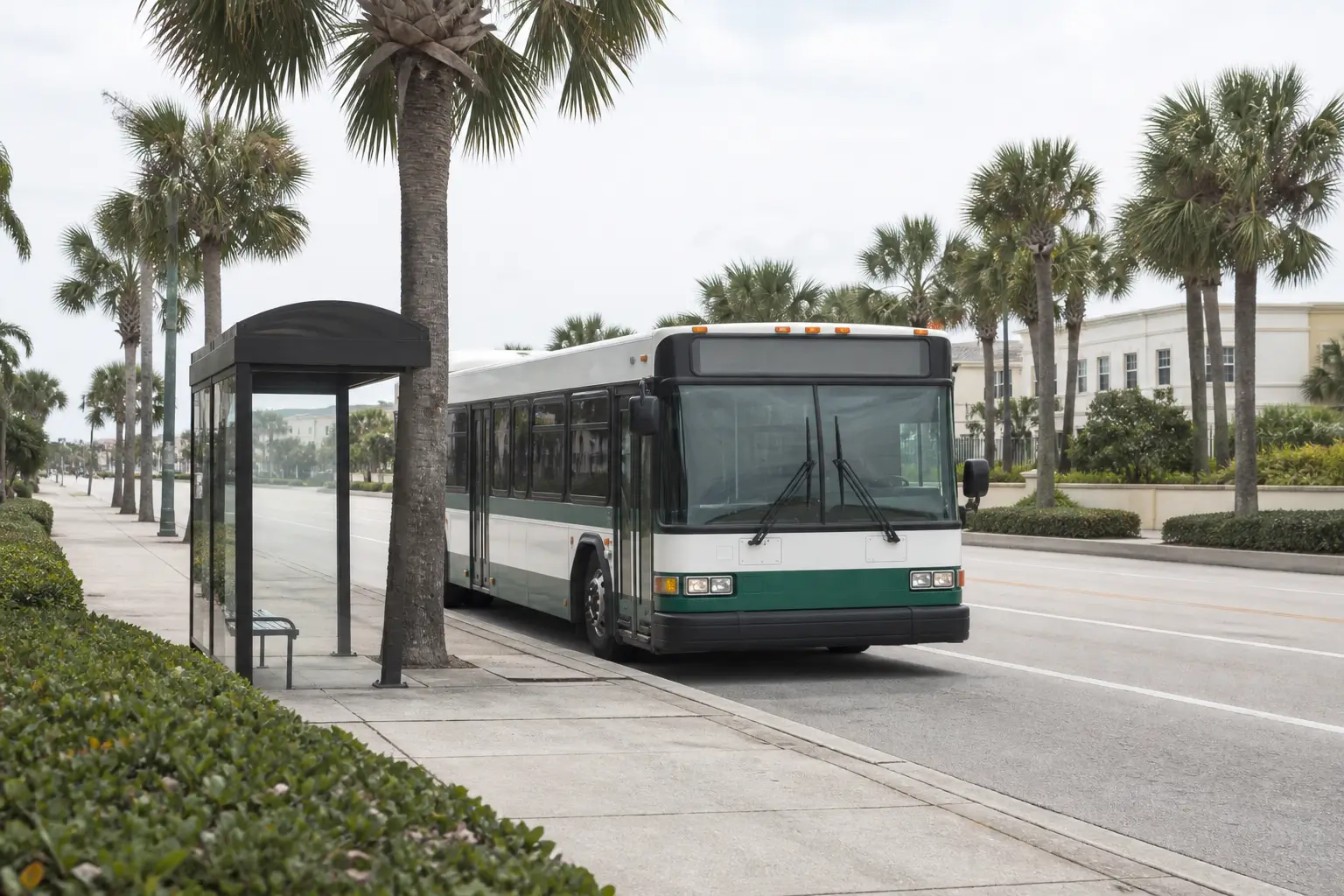
When the bus is public, Florida law caps what can be paid
Florida waives sovereign immunity for its agencies and subdivisions under Fla. Stat. 768.28. A public body can be sued in tort in the same manner and to the same extent as a private individual. The statute then limits what that means in practice.
Under section 768.28(5)(a), a claim or judgment against the state or one of its subdivisions cannot be paid above $200,000 to any one person. All claims arising out of the same incident are capped together at $300,000. A bus carries dozens of passengers, so a single collision can produce far more loss than the second figure allows. Anything above the cap can be paid only if the Legislature passes a separate act. That is a political process.

The same subsection removes two things a private defendant could be liable for. Punitive damages are not available against a public body. Neither is interest for the period before judgment.
None of this makes a claim against a public agency not worth bringing. It makes the identity of the defendant something to establish early, because it governs what the case can realistically achieve and whether a second responsible party needs to be found.
The written claim that has to come first
A lawsuit against a Florida public body cannot simply be filed. Section 768.28(6)(a) requires the claimant to present the claim in writing to the appropriate agency first. For claims against anything other than a municipality or a county, the claim also has to be presented in writing to the Florida Department of Financial Services. The presentment has to happen within three years of the claim accruing, and the agency has to deny the claim in writing before suit.
Missing that step is fatal to the case regardless of how strong the underlying facts are. It is also entirely avoidable. That is why the operator gets identified first.
Types of bus accidents we handle in Florida
School bus accidents
A Florida school district is a subdivision of the state, so 768.28 applies. These cases often involve children, which raises questions about long-term care that a capped recovery may not cover.
Public transit accidents
County and municipal systems including Miami-Dade Transit, Broward County Transit and Palm Tran are public bodies. So are the regional systems serving Tampa, Orlando and Jacksonville.
Charter and tour bus accidents
Florida’s tourism industry runs a large charter fleet. A private operator is not protected by 768.28 and is subject to the federal safety rules that apply to interstate carriers.
Shuttle and resort transport
Airport shuttles, hotel transport and theme park transport are usually privately operated, though the contract behind them sometimes involves a public authority.
Paratransit and medical transport
Services carrying passengers with disabilities are often operated under contract to a public agency, which can put both the contractor and the agency in the claim.
What Florida’s own crash data says about who gets hurt
The state publishes injury levels by vehicle type each year. The most recent annual report from the Florida Department of Highway Safety and Motor Vehicles says something useful about who a bus claim is usually brought for.
| Bus occupants | Drivers | Passengers |
|---|---|---|
| Involved in a crash | 7,445 | 26,949 |
| Killed | 0 | 8 |
| Incapacitating injury | 7 | 39 |
| Non-incapacitating injury | 53 | 283 |
The pattern is what you would expect from the vehicle. A bus driver sits high, behind a large crumple zone, restrained. Passengers stand in aisles, sit sideways, or ride in rows with no belt at all. The people who get hurt are the people being carried.
That is also why the aggregate cap in section 768.28 matters so much on these cases. One collision produces many injured passengers, and they share a single $300,000 ceiling between them when the operator is public.
(Source: Florida Traffic Crash Facts. “Bus” is body type code 8 on the state crash report, and motor coaches are counted separately.)
Hurt on a Bus in Florida?
Who operated the bus decides your deadline and the ceiling on what can be paid. The consultation is free.
Free case reviewor call (800) 863-5312
Common causes of Florida bus accidents
Operator hiring and supervision
A transit agency or charter company decides who drives, how they are screened and what happens after a complaint. Those decisions are the company’s own, separate from anything the driver did on the day.
Driver fatigue and scheduling
Routes that leave no realistic margin produce drivers who work through it. On interstate charter routes, federal hours-of-service rules apply and the records behind them are discoverable.
Deferred maintenance
Brakes, tires and door mechanisms on a vehicle in daily service wear out on a schedule somebody is supposed to keep. Maintenance records show whether they did.
Boarding and alighting injuries
A passenger struck while getting on or off, or thrown because the bus pulled away early, is a common Florida bus accident claim. There is often no vehicle damage at all to point to.
Left turns and blind spots
A bus turning across traffic has a long body to swing and pillars that hide a pedestrian or a cyclist for the length of the turn.
Weather and standing water
Florida’s afternoon storms cut visibility and standing water lengthens a stopping distance that is already long on a loaded vehicle.
How a bus accident claim differs from a car accident claim
The defendant is often the government
That single difference brings the cap, the loss of punitive damages and the written presentment described above. No car accident claim against a private driver carries any of it.
Florida’s no-fault rules fit awkwardly
A passenger hurt on a public bus does not necessarily have their own vehicle’s coverage in play the way a driver does. Which policy responds first becomes a real question.
There are more claimants
Everybody on board has a claim. On a capped public case they compete for the same money. That makes moving early a practical concern.
The evidence is corporate, not personal
A car case turns on two drivers’ accounts. A bus case turns on video, telematics, dispatch logs, maintenance files and training records, all held by the operator and all on a retention clock.
Who can be held responsible for a Florida bus accident
The driver is rarely the only answer. A bus operator is responsible for the conduct of its drivers. It is separately responsible for its own decisions about hiring, training, scheduling and maintenance. A maintenance contractor can be responsible where a mechanical failure caused the crash. A parts manufacturer can be responsible where a component failed.
Another driver is sometimes the one who caused the collision, and that driver is not covered by 768.28 at all. Where a public bus and a private vehicle are both partly at fault, the private defendant remains liable under ordinary rules, which can matter a great deal when the public share is capped.
Florida applies modified comparative fault to all of this. HB 837 moved the state to a modified system under Fla. Stat. 768.81 on March 24, 2023. A person found more than 50 percent at fault recovers nothing. At 50 percent or less, the recovery is reduced by that percentage. Insurers argue shared fault to move a claimant across that line.
What a Florida bus accident claim can cover
Economic losses are the measurable ones:
- emergency treatment, hospital care and surgery
- rehabilitation, medication and assistive equipment
- lost earnings, and reduced earning capacity where an injury changes what someone can do for work
Non-economic losses cover what the injury did to the person. Florida compensates pain, the loss of activities that mattered to someone and the effect an injury has on family relationships.
Where a death results, Florida’s wrongful death statute governs who may bring the claim and what the estate and surviving family may recover.
How long you have to file a Florida bus accident claim
Two separate clocks run. They do not run at the same speed.
The general negligence deadline in Florida is two years from the date of injury, for injuries on or after March 24, 2023. HB 837 shortened it from four years. An injury before that date may still fall under the previous four-year window.
Where a public body is involved, the presentment requirement under 768.28(6)(a) runs alongside that deadline and has to be satisfied first. The practical effect is that a claim against a transit agency has less usable time than two years suggests. The written claim and the agency’s written denial both have to happen inside that window.

Evidence moves faster than either clock. Buses record video and telematics data, and retention periods are measured in weeks on many systems. A preservation request sent early is often what keeps that footage from being overwritten.
Talk to a Florida Bus Accident Lawyer
Bus video and telematics are often overwritten within weeks, so the preservation request is the part that cannot wait.
Free Case Reviewor call (800) 863-5312
Where we work in Florida
Zinda Law Group’s Florida office is in Miami and the firm handles bus injury claims across the state:
The initial consultation is free. Zinda Law Group’s No Win, No Fee Guarantee means you do not pay attorney’s fees unless the firm wins your case.
Our Florida Office
Zinda Law Group 2828 Coral Way, Suite 303 Miami, Florida 33145
Call (800) 863-5312. Meetings with attorneys by appointment only.
Other Florida practice areas
Zinda Law Group handles these claims across Florida:
- Personal injury
- Car accidents
- Truck accidents
- Motorcycle accidents
- Dog bites
- Premises liability
- Medical malpractice
- Wrongful death
Frequently Asked Questions About Florida Bus Accident Claims
Who is responsible for a Florida bus accident?
The driver is rarely the only answer. A bus operator is responsible for the conduct of its drivers, and separately for its own decisions about hiring, training, scheduling and maintenance. A maintenance contractor can be responsible where a mechanical failure caused the crash. A parts manufacturer can be responsible where a component failed. Another driver is sometimes the one who caused the collision, and that driver is not protected by the sovereign immunity rules at all.
How much can be recovered from a public bus operator in Florida?
Section 768.28(5)(a) sets the ceiling. No one person can be paid above $200,000. All claims arising out of the same incident share a limit of $300,000 between them. Anything above that can be paid only if the Legislature passes a separate claim bill. Punitive damages and interest for the period before judgment are not available against a public body at all.
Do I have to file a written claim before suing a Florida transit agency?
Yes. Section 768.28(6)(a) requires the claim to be presented in writing to the appropriate agency first. For claims against anything other than a municipality or a county, it also goes to the Florida Department of Financial Services. The presentment has to happen within three years of the claim accruing. The agency then has to deny the claim in writing before suit.
How long do I have to file a Florida bus accident claim?
The general negligence deadline in Florida is two years from the date of injury, for injuries on or after March 24, 2023. Where a public body is involved, the written presentment runs alongside that deadline and has to be satisfied first. A claim against a transit agency therefore has less usable time than two years suggests.
Speak with a Florida bus accident lawyer
If you or a family member was hurt on a bus in Florida, the first question worth answering is who operated it. That answer sets the deadline, the ceiling and the steps that have to happen before anything is filed.
Call Zinda Law Group at (800) 863-5312 for a free consultation with a Florida bus accident lawyer.
Meetings with attorneys by appointment only.