













Oilfield injuries in Texas and New Mexico often reach past a workers’ comp claim. An oilfield injury lawyer looks at every company on the site, the equipment that failed and the employer’s workers’ compensation coverage. Those facts decide which claims exist and how long each one stays open.
The date of the accident sets most of these deadlines, so it is the first thing we ask for.
Article summary
Key things to know
- Oilfield injuries in Texas and New Mexico often reach past a workers’ comp claim.
- Workers’ comp does not pay for pain and suffering.
- Texas does not require most private employers to carry workers’ comp, and an injured worker can sue a nonsubscriber employer for negligence.
- Oilfield accident lawyers look past the employer to the operator and the contractors.
- New Mexico generally allows three years for an injury lawsuit.
What does an oil field injury lawyer do after a well site accident?
An oil field injury lawyer starts by finding out who controlled the work. The operator holds the lease, a drilling contractor runs the rig, a well servicing company handles completion or workover jobs and a trucking company moves water, sand and equipment.
The first weeks of an oilfield accident case are about evidence. Incident reports, maintenance logs, the job safety analysis, photographs of the site and the names of the crew all start to disappear once work resumes. A Texas oilfield injury lawyer asks for that material early.
Oilfield accident lawyers also look for patterns, such as earlier incidents at the same well, prior OSHA citations or repeated equipment malfunctions. Oil field accident records like these can show that a company knew about a hazard.
Zinda Law Group handles oilfield injury claims for oilfield workers across the oil and gas industry in Texas and New Mexico. The oilfield injury attorney on a case can work with investigators, medical providers and rig safety consultants to build the claim.
Workers’ comp, third-party claims and nonsubscriber employers
Two questions decide whether workers’ comp is the only claim after an oilfield accident. Did the employer carry workers’ compensation insurance? Did another company have a hand in the accident?

If a Texas employer carries workers’ comp, benefits are generally the only remedy against that employer. The worker receives medical care and income benefits without proving fault. Texas comp also pays death and burial benefits. It does not pay for pain and suffering, and the worker usually cannot sue that same employer. In New Mexico, comp is also generally the exclusive remedy against an insured employer.
Texas caps weekly income benefits by the date of injury. The maximum is $1,271 a week for injuries from October 1, 2025 to September 30, 2026, and $1,314 a week for injuries from October 1, 2026 to September 30, 2027 (Texas Department of Insurance). Texas law also bars an employer from firing or punishing a worker for filing a comp claim in good faith or for hiring a lawyer to handle the claim.
Texas nonsubscriber employers
Texas does not require most private employers to carry workers’ compensation insurance. An employer that chooses not to carry workers compensation insurance is called a nonsubscriber. Nonsubscribers made up 24 percent of Texas private employers in 2024, and 13 percent of employees worked for one (Texas Department of Insurance). An injured worker can sue a nonsubscriber employer for negligence in a personal injury lawsuit.
A nonsubscriber loses three defenses in that lawsuit. It cannot argue that the worker was partly at fault. It cannot argue that the worker assumed the risk. It cannot blame the injury on a co-worker’s negligence. The worker still has to prove the employer was negligent. Our page on nonsubscriber claims in Texas covers this area of law in more depth.
Claims against other companies on the site
Workers’ comp protects the employer. It does not protect every other company on the lease, including the oil companies that control the site. A worker employed by a well servicing company can bring an oilfield accident claim against a drilling contractor, an operator or an equipment maker whose negligence caused the injury. New Mexico law also keeps claims against other responsible parties open, and in some cases allows a suit against the employer itself when the employer willfully or intentionally caused the injury.
That is why an oilfield accident lawsuit against another company matters. A third-party claim can include losses that workers’ comp does not pay, such as pain and suffering, which is why an injury lawyer looks for one early.
If a worker was killed
When a worker’s death was caused by the employer’s gross negligence or an intentional act, the surviving spouse and the worker’s children may still seek exemplary damages under Texas law. Families should also read about Texas wrongful death law and New Mexico wrongful death claims, since the deadlines and the people allowed to file differ from an injury claim. Our page on oilfield wrongful death claims explains how these cases work.
Free case review
Unsure whether an oil field injury may qualify?
Workers’ comp may not be the only claim. The review looks at which other companies on the oil and gas site may share the blame.
Oilfield safety rules and how a broken rule proves fault
Oilfield workers in the oilfield industry work long rotating shifts at remote sites, often hours from a trauma center. Heavy equipment, pressurized lines and toxic chemicals share one small pad. Chemical exposure and fatigue add to every task.
Safety regulations written for worker safety set a safeguard for each of those risks. OSHA names uncontrolled electrical, mechanical, hydraulic and other hazardous energy among the main oilfield hazards, which is what lockout and tagout procedures control. OSHA also warns of chemical burns, toxic vapors and silica dust from frac sand.
When oilfield companies skip one of these steps, the records usually show it. A missing lockout tag, an unsigned job safety analysis or an earlier OSHA citation for the same hazard can show that a company knew the risk and ignored it. Oil companies and oil and gas drillers often hire several layers of contractors for one well, and each is expected to follow the same safety protocols. Oil and gas companies also set the pace of the work, and a rushed schedule can raise the risk of serious injuries.
Who can be held liable for an oilfield accident
Most oilfield deaths involve contractor crews. In CDC research covering 2014 to 2019, about three fourths of the industry’s deaths were among contractors. Well servicing company workers made up 60.4 percent, drilling contractors 17.9 percent and operators 5.1 percent.

Operators and property owners
The operator or property owner, usually one of the oil companies that hold the lease, often sets the schedule and the safety rules for the whole site. Under Texas law a property owner is liable to a contractor’s employee only in limited situations.
Drilling contractors and well servicing companies
Drilling contractors and well servicing companies run the crews where most deaths occur. Inadequate training, skipped safety protocols and rushed schedules can show up in the records. On many Texas job sites a general contractor can agree in writing to provide workers’ comp to a subcontractor’s crew. That agreement can change who the injured worker can sue.
Equipment manufacturers
Equipment malfunctions cause a share of oilfield injuries. A blowout preventer, a pressure line, a winch line or a crane can fail because of how it was designed or built. A claim against the manufacturer of defective equipment sits outside workers’ comp entirely.
Common oilfield accident types
Oilfield workers across the oil and gas industry see the same accident types year after year, and oilfield accident lawyers sort them by cause.
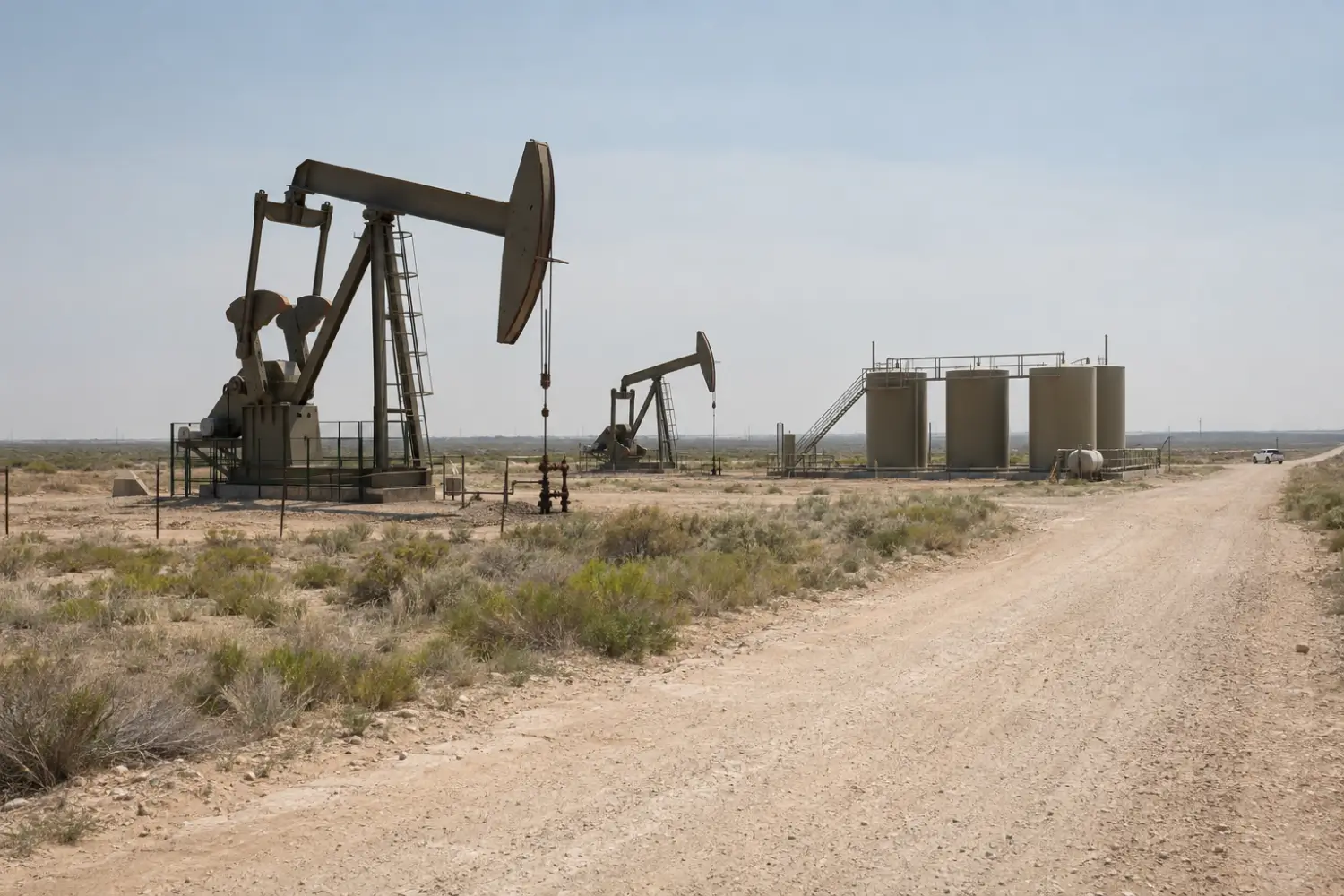
Oil rig accidents on land drilling rigs
Land drilling rigs combine heavy machinery, pressurized systems and work at height. Rig floor injuries, dropped pipe and falls from the derrick all fall under oil rig accidents. Offshore platforms run under different law. Our pages on offshore oil rig accidents and Jones Act claims explain those cases.
Oil truck accidents and lease road crashes
Transportation incidents lead oilfield deaths. Transportation incidents accounted for 28 of the 65 deaths in drilling and oilfield support companies and operators in 2024 (BLS). The company that owns the truck, hires the driver or loads the trailer can be responsible for a crash on a lease road or highway. Our page on oilfield truck accidents covers who is liable and what evidence to secure.
Fracking and gas field accidents
Hydraulic fracturing puts high-pressure lines, sand and chemicals on the same pad. Oil and gas wells can release hydrogen sulfide, a toxic gas. Oilfield workers on frac crews face these hazards on every stage, and the oilfield injuries they cause are often severe. Our page on fracking accidents covers frac crew claims in detail.
Explosions and fires
Explosions caused 14.5 percent and fires 12.8 percent of oil and gas extraction deaths from 2014 to 2019 in the CDC data. These accidents happen at the well site, around tank batteries and during hot work. Our pages on refinery accidents and refinery explosions cover them.
Falls, struck-by incidents and heavy machinery
Contact with objects or equipment caused about a quarter of oil and gas extraction deaths from 2003 to 2013 (CDC). Accidents involving heavy machinery include workers struck by swinging pipe, caught between equipment or pinned under a load. Falls caused 4.9 percent of deaths in the CDC’s 2014 to 2019 data. Chemical exposure and equipment malfunctions round out the list of oil field workers’ claims.
Common injuries and the medical treatment they need
Common injuries suffered in oilfield accidents are severe. Many oilfield injuries are life-changing, and medical treatment can continue for years.
- Severe burns. Fires, flash explosions and chemical exposure can cause burns that need surgery and skin grafts.
- Crush injuries. Pinned limbs and crushed hands are common with heavy machinery and pipe handling.
- Traumatic brain injuries (TBI). A fall or a blow from equipment can cause traumatic brain injuries with lasting effects on memory and work.
- Spinal cord injuries. Falls from the derrick and vehicle rollovers can cause spinal cord injuries and paralysis.
- Amputations. Crush injuries sometimes end in the loss of a hand, arm or leg.
- Lung disease from prolonged exposure. Prolonged exposure to toxic chemicals and silica dust can cause illness years after the work. OSHA links frac sand silica to silicosis, lung cancer, COPD and kidney disease.
Serious injuries like these bring medical bills and lost wages. Medical expenses can run for years for oilfield workers who cannot go back to the only work they know. Crush injuries and burns often need several surgeries. Severe injuries also change what a worker can earn in the future.
Seek medical attention right away
An injured worker should seek medical attention the same day, even when the injury seems minor. Some traumatic brain injuries and internal injuries show symptoms later. Medical records made close to the accident are the strongest evidence of what the accident caused.
Fatality numbers for the oil and gas industry
The U.S. oil and gas extraction industries lost 65 workers in 2024, down from 78 in 2023 and 83 in 2022, according to the Bureau of Labor Statistics.
The fatal injury rate for all U.S. workers was 3.3 per 100,000 full-time equivalent workers in 2024. For the mining, quarrying, and oil and gas extraction sector it was 13.8, roughly four times the all-worker rate. Support activities for mining, which includes oilfield service work, reached 14.6 (BLS).
Texas had 36 of the 92 U.S. deaths in the mining, quarrying, and oil and gas extraction sector in 2024, more than any other state. The Texas rate for that sector was 16.8 per 100,000 workers, against 3.9 for all Texas industries (BLS).

Serious and fatal injuries in oil and gas accidents follow those causes. Oil and gas workers in the oilfield industry face them on every shift, and the Bureau of Labor Statistics reports the oil industry’s numbers yearly.
How fair compensation is measured in an oilfield injury claim
Fair compensation depends on what the injury has cost and what it will cost. The claim path matters too. Workers’ comp pays set medical and income benefits, and most income benefits replace only part of lost wages. A lawsuit against another company or a nonsubscriber employer can recover the full range of personal injury damages.
Economic and noneconomic losses
Economic losses are the measurable costs of the injury. They include medical expenses, future medical expenses, lost wages and lost earning capacity. Under Texas law, recovery for medical expenses is limited to amounts actually paid or incurred. Mounting medical bills are often the first pressure a family feels.
Personal injury cases also recover noneconomic losses, which cover what an injury takes that no bill shows. They include physical pain, mental anguish, physical impairment and disfigurement. Workers’ comp does not pay these losses, which is why a claim against another company or a nonsubscriber employer matters so much.
Texas also allows exemplary damages in an injury case when the injured person proves fraud, malice or gross negligence by clear and convincing evidence. The jury must be unanimous, and Texas caps the amount by statute. New Mexico allows punitive damages when the conduct was malicious, willful, reckless or wanton.
When fault is shared
Texas uses proportionate responsibility. A person found more than 50 percent responsible cannot recover, and a recovery is reduced by their percentage of fault. New Mexico uses pure comparative fault, so a recovery is reduced but not barred.
Every insurance company involved will look for ways to shift fault. Personal injury claims move faster when the evidence is gathered before those arguments start.
What to do after an oilfield accident
The steps oilfield workers take in the first days after an oilfield accident protect both their health and the claim.
- Get immediate medical attention. Seek medical attention before anything else, because treatment starts the medical record.
- Report the injury to the employer in writing. Keep a copy and note the date and the person who received it.
- Write down what happened. Record the time, the location, the equipment involved and the names of the crew.
- Photograph the site and preserve the evidence. Ask that the equipment involved be left in its original condition.
- Keep every document. Pay stubs that show lost wages, medical records, benefit letters and messages from the insurance company all matter.
- Decline a recorded statement to an insurance adjuster until an oilfield injury lawyer has reviewed the claim. Statements to an insurer can be used to limit the claim.
Employers must report a work-related death to OSHA within 8 hours, and an in-patient hospitalization, amputation or loss of an eye within 24 hours. That report is one of the first records to request in serious oilfield accident cases.
State-specific deadlines
Questions about how much time you have?
Deadlines to file an oilfield injury claim
Every oil field injury claim has a filing deadline. In Texas, the clock for most injury lawsuits starts on the day of the oil field accident.
| Claim | Texas | New Mexico |
|---|---|---|
| Personal injury lawsuit | Generally two years from the injury (Tex. Civ. Prac. & Rem. Code 16.003(a)) | Generally three years (NMSA 1978, 37-1-8) |
| Wrongful death lawsuit | Generally two years from the date of death (Tex. Civ. Prac. & Rem. Code 16.003(b)) | Generally three years from the date of death (NMSA 1978, 41-2-2) |
| Shared fault | Barred above 50 percent (Tex. Civ. Prac. & Rem. Code 33.001) | Pure comparative fault |
General rules current as of September 2026. Exceptions apply.

Workers’ comp claims run on shorter clocks. In Texas, injured oilfield workers must report the injury to the employer within 30 days, with narrow exceptions, and file a claim with the Division of Workers’ Compensation within one year of the injury. A death benefits claim is due within one year of the death. In New Mexico, written notice to the employer is generally due within 15 days of a work accident, or within 60 days if the injury prevented earlier notice. A New Mexico comp claim generally must be filed within one year after the employer or insurer fails or refuses to pay benefits. In a fatal case that claim is due within one year of the death. Call (800) 863-5312 before any of these dates runs out.
Where Zinda Law Group handles oilfield injury cases
Zinda Law Group handles oilfield accident cases across the Permian Basin, the Eagle Ford and the New Mexico side of the basin, plus Colorado and Arizona. Injured oilfield workers in any of these regions can reach our oilfield accident lawyers by phone or through the form.
- Texas. Midland oil field injury lawyer, Odessa oilfield injury lawyer, San Antonio oil field accident lawyer, Corpus Christi oil field injury lawyer, Houston oil field accident lawyer, El Paso oil field accident lawyer, Lubbock oilfield injury lawyer, Dallas oil field injury lawyer, Fort Worth oilfield accident lawyer, Austin oilfield injury lawyer, College Station oilfield accident attorney, Tyler oilfield accident lawyer, Waco oilfield accident attorney
- New Mexico. Albuquerque oil field injury lawyer, Hobbs oil field accident lawyer, Las Cruces oilfield injury lawyer, Roswell oilfield injury lawyer, Santa Fe oilfield injury lawyer
- Colorado and Arizona. Denver oilfield accident lawyer, Colorado Springs oilfield injury lawyer, Boulder oilfield injury lawyer, Fort Collins oilfield accident attorney, Phoenix oil field injury lawyer
CDC research found that about one third of oil and gas extraction deaths from 2014 to 2019 occurred in the Permian Basin. The oil industry concentrates in these regions, and so do the most serious accident cases. The firm takes calls from injured workers in any state.
When you are ready
Talk through the next step.
Help for oilfield accident victims and their families
Injured oilfield workers, oilfield accident victims and their families usually call with the same concerns. Our oilfield accident lawyers answer them in the first call, before anyone signs anything.
Zinda Law Group represents oilfield and industrial workers and other workplace accident victims. We do not get paid unless we win your case. Insurance companies often open with a low settlement offer to injured workers, well short of fair compensation.
How an oilfield accident case moves forward
Most oilfield accident cases follow the same path. The oilfield accident attorney reviews the facts in a free consultation. The legal team then requests the incident reports, the OSHA file and the medical records, and works out which contractors were on the job. Once the injuries are treated and the losses are measured, the claim goes to the insurance companies involved.
Many personal injury claims settle. When an offer does not reach fair compensation for the losses, the case can go to trial. Oil field accident lawyers at Zinda Law Group explain each offer before any decision is made. They also watch the deadlines on every claim at once.