











A bicycle accident lawyer helps injured cyclists hold a careless driver responsible. When a car and a bike collide, the cyclist is the one most likely to be injured.
State law sets the deadline to file and the rule on shared fault.
You pay nothing unless we win. Zinda Law Group offers a free consultation about your bike accident at (800) 863-5312.
Article summary
Key things to know
- In Texas, New Mexico, Arizona, Colorado and Florida, cyclists on the road generally have the rights and duties of a driver, with exceptions.
- A bicycle accident claim usually rests on proof that a driver was negligent and that it caused your injuries.
- The filing deadline for a negligence claim is generally two or three years, depending on the state and the kind of claim.
- Your own share of fault can reduce what you recover, and in some states a large enough share bars the claim.
Free case review
Knocked off your bike by a careless driver?
Tell us how the bike crash happened. We will go over who may be at fault and which state deadline applies.
What a bicycle accident lawyer does
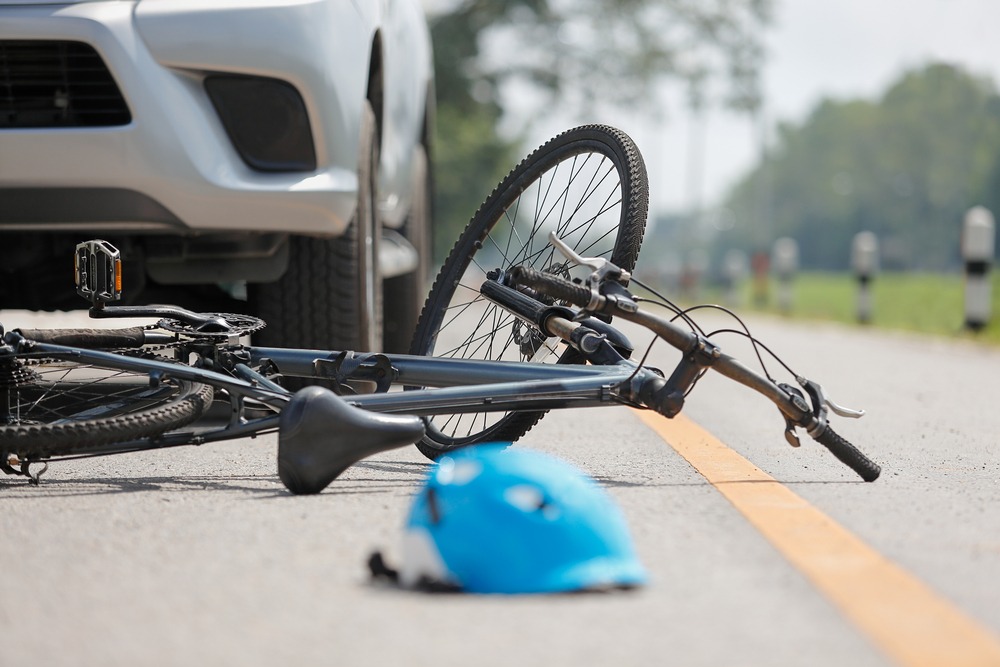
Bicycle accident lawyers represent bicycle accident victims in claims against the driver or company that caused the crash. The work is part of personal injury law, which lets an injured person seek compensation from whoever is responsible. Our personal injury lawyer page explains how those claims work.
A bicycle accident attorney starts by collecting the police report, photos and witness statements. The lawyer also handles the calls from insurance companies and adds up your losses. A bike accident lawyer explains your options in plain words at each step.
If the insurer will not offer fair compensation, your lawyer can file a bicycle accident lawsuit. A personal injury lawsuit must be filed before your state’s deadline.
Traffic laws that apply to drivers and cyclists
Traffic laws decide who had the right of way, so they often decide who was at fault.
Cyclists operating on a road have the rights and duties of a driver in Texas, New Mexico, Arizona, Colorado and Florida. Each statute has exceptions. The National Highway Traffic Safety Administration (NHTSA) says all states require bicyclists on the roadway to follow the same rules as motorists.
Some states also set a minimum distance for passing. Arizona, Colorado and Florida each generally require drivers of motor vehicles to leave at least three feet when they pass a bicycle. Florida’s rule does not apply to a bicycle in a separated bicycle lane. A broken traffic law does not prove fault by itself.
Common causes of bicycle accidents
Most bicycle accidents are falls, according to NHTSA, and the most serious ones involve cars. Bicycle accidents happen with cars when a driver makes one of these mistakes.
- Turning left across the path of an oncoming cyclist
- Opening a car door into a rider’s path
- Drifting into bike lanes while looking at a phone
- Running a stop sign or a red light
A crash can also happen when a driver passes too close on a road with no bike lanes.
Our drunk driving accident page covers cases involving drunk driving, which can injure cyclists as well as people in cars.
Other causes of bicycle accidents
A bike accident does not always involve a moving car. Potholes, loose dogs and broken bicycle parts can put a rider on the ground.
Who is liable in a bicycle accident
Liability follows the carelessness that caused the crash. More than one person or company can share it.
Negligent drivers
Negligent drivers are the first place to look after bicycle collisions with motor vehicles. Negligence means failing to act as a reasonably careful person would. The at fault driver is responsible when that carelessness caused your injuries. A driver who opens a car door without looking can be liable the same way.
In a bicycle accident case you have to prove that the driver was negligent, that the negligence caused your injury and that you had losses. A police report, photos and witness statements help prove it.
Cities, counties and road owners
A dangerous road can cause a serious crash with no car involved. Claims against a city, a county or a state agency have their own notice rules, and the notice can be due within months.
Bicycle and parts makers
Defective frames, forks and brakes can cause a fall. Claims over an unsafe product are covered on our product liability lawyer page.
Bicycle accident statistics
NHTSA tracks bicyclist deaths in traffic accidents each year. It counted 1,103 bicyclists killed in traffic crashes in 2024. Nearly three quarters of all bicyclist deaths occurred in urban areas, and deaths were highest from July through October.
These figures do not say who was at fault in any one crash.
Common injuries in bicycle crashes
A rider has no frame, seat belt or airbag. Bicycle crashes with motor vehicles can cause more serious injuries than the same impact would in most car accidents.
- Head injuries, including concussions and traumatic brain injuries
- Spinal cord injuries
- Broken bones
- Soft tissue injuries
- Road rash and scarring
After a serious bicycle accident, tell the doctor about any head trauma. Head injuries, including traumatic brain injuries, need a medical exam.
Broken bones can heal and still keep a rider off work for months. With serious injuries, the claim should count the care you will need later.
Our spinal cord injury page covers severe injuries to the back and neck. Separate pages cover broken bones injury claims and concussion injury claims.
When a cyclist dies, state law lets certain family members or the estate bring a claim. Our wrongful death lawyers page covers who can file.
Compensation in a bicycle accident claim
State law and the evidence decide which losses you can recover compensation for. A claim can include economic damages and non-economic damages. No lawyer can promise an amount.
Economic damages
Economic damages are the losses with a dollar figure.
- Medical bills and other medical expenses
- Future medical care the evidence supports
- Lost wages and damage to your ability to earn money in the future
- Property damage, such as a ruined bicycle
Non-economic damages
Non-economic damages cover harm that has no receipt. Pain and suffering is the best known, and emotional distress and a lower quality of life count too.
In Florida, a claim against an insured driver generally allows pain and suffering damages only for a permanent injury or another injury the statute lists.
Our article on personal injury claim worth explains the factors that go into a value.
Deadlines and shared fault rules by state
The statute of limitations is the time limit to file a lawsuit. A bike accident claim filed late can be barred.
Injury claims after a bicycle accident generally follow the rules below in the states where Zinda Law Group regularly handles them.
| State | General deadline for an injury lawsuit | Shared fault rule | Source |
|---|---|---|---|
| Texas | Generally two years | Damages are reduced by your share. No recovery above 50 percent | Tex. Civ. Prac. & Rem. Code 16.003 and 33.001 |
| New Mexico | Generally three years | Your share of fault lowers the award and does not bar the claim | NMSA 1978, 37-1-8 and Scott v. Rizzo (1981) |
| Arizona | Generally two years | Damages are reduced in proportion to your fault and the claim is not barred | A.R.S. 12-542 and 12-2505 |
| Colorado | Generally three years when the claim arises from the use of a motor vehicle, and two years for other negligence claims | You recover only if you were less than 50 percent at fault, and damages are reduced by your share | C.R.S. 13-80-101, 13-80-102 and 13-21-111 |
| Florida | Generally two years for a negligence claim that arose after March 24, 2023 | Your share of fault reduces the damages. No recovery above 50 percent | Fla. Stat. 95.11 and 768.81 |
These are general rules of personal injury law as of October 2026. Each has exceptions, and a death claim can have a different deadline.
State-specific deadlines
Questions about how much time you have?
What to do after a bike accident
These steps protect your health and your personal injury claim.
- Get medical care. See a doctor the same day, even if you feel fine.
- Call the police. A police report records the driver, the vehicle and the accident scene.
- Collect physical evidence. Photograph the accident scene, any bike lanes, the car and your injuries. Keep the bicycle and your helmet as they are.
- Get witness statements. Ask anyone who saw the crash for a name and a phone number.
- Keep your records. Save medical records, medical bills and proof of lost wages.
- Wait on statements. The driver’s insurance company may ask for a recorded statement. You can talk to a bike accident lawyer first.

Bicycle safety tips from NHTSA
NHTSA’s advice for riders is short.
- Wear a helmet that fits, and bright or reflective gear
- Use a white front light and a red rear light at night
- Ride in the same direction as traffic
- Obey street signs, signals and road markings
NHTSA also tells motor vehicle drivers to yield to bicyclists as they would to other motorists.
How insurance companies handle a bicycle accident claim
A bicycle accident claim usually starts with the driver’s insurance company, because a liability policy may cover the loss. The same insurance companies that handle car accidents handle these claims. That insurer does not represent you.
An early offer can arrive before anyone knows whether your serious injuries will fully heal. One made before your medical care ends can leave out treatment you have not had yet.
If the driver fled or had no insurance, ask your own insurer whether the uninsured motorist coverage on your auto policy applies.
From a claim to a lawsuit
The legal process starts with an investigation and a demand letter. A bicycle accident case can settle with insurance companies at this stage. If the insurer will not pay fairly, a lawsuit lets injury victims seek fair compensation in court.
The decision to settle stays with you.
How to choose a bicycle accident attorney
An experienced bicycle accident lawyer who has handled cycling accidents like this one is the right place to start. Not all personal injury lawyers take these cases.
Four questions are worth an answer before hiring a bike accident lawyer.
- Which attorney will handle my bicycle accident case
- Has the firm taken cases for accident victims to trial
- How often will I hear about my claim
- Does the firm work on a contingency fee basis, and how are case costs paid
When you are ready
Talk through the next step.
Bicycle accident lawyers by state and city
Zinda Law Group handles bicycle accident claims in the states below. Each link opens the page for that state or city. If your crash happened in another state, call us and we will tell you whether we can help.
- Texas. Texas bicycle accident lawyers, Austin bicycle accident attorney, Houston bicycle accidents, Dallas bicycle accident lawyer, San Antonio bicycle accidents, Fort Worth bicycle accidents, El Paso bicycle accidents, Plano bicycle injury attorney, Waco bicycle accidents, Corpus Christi bicycle accidents
- New Mexico. New Mexico bicycle accidents, Albuquerque bicycle accident lawyer, Las Cruces bicycle accidents, Santa Fe bicycle accidents, Roswell bicycle accidents
- Arizona. Arizona bicycle accident lawyer, Phoenix bicycle accident lawyer, Tucson bicycle accidents, Scottsdale bicycle accidents
- Colorado. Colorado bike accident attorneys, Denver bicycle accident lawyer, Colorado Springs bike accidents, Boulder bicycle accident lawyers, Aurora bicycle accidents, Fort Collins bicycle accidents
- Florida. Our Florida bicycle accident lawyers page covers crashes across the state
A free consultation with a bicycle crash law firm
At Zinda Law Group, a bicycle accident case starts with a free consultation, which you can request on our free case evaluation page. We explain who may be liable and the deadline that applies. The free case evaluation costs nothing, and you are not required to hire us.
If you hire our bicycle crash law firm, our bicycle accident lawyers handle the claim and work toward a financial recovery while you heal.
Our firm works on a contingency fee basis, so there is no out-of-pocket cost to secure the legal representation you need. You pay nothing unless we win.