












After a gas explosion, the first question is where the gas escaped. The answer shows which company or person may be the responsible party.
You pay nothing unless we win. Zinda Law Group offers a free consultation about your gas explosion at (800) 863-5312.
Article summary
Key things to know
- Federal rules set minimum safety requirements for natural gas pipelines.
- A gas service line ends at the outlet of the customer meter or at the customer’s piping, whichever is farther downstream, or at the piping if there is no meter.
- Many propane tank systems fall outside the federal pipeline rules.
- The filing deadline depends on the state, and a claim against a government body can need notice much sooner.
Free case review
Injured when gas exploded or caught fire?
Note where the accident happened, and ask who may be responsible.
What a gas explosion lawyer does
A gas explosion lawyer handles injury claims against the companies and people responsible for letting gas escape or ignite, through carelessness or a defective product. Gas explosion cases are part of our personal injury practice.
Fire investigators can help trace a leak back through the gas supply. Expert testimony from forensic and gas safety experts can show where a gas line failed. A lawyer can also ask the companies involved to preserve evidence.
A lawyer can compare an insurance offer with fair compensation for your injuries. You decide whether an offer is a fair settlement.
How a gas leak becomes an explosion
When leaking gas collects in a closed space, one spark can set off a massive explosion. A natural gas explosion or a propane explosion can start this way.
In a 2024 report, the National Fire Protection Association found that natural gas was the first material ignited in most reported structure fires involving flammable gases.
Explosions caused by leaking gas can start in several places.
- A corroded or damaged gas line
- An old, unmarked gas line struck during digging on construction sites
- A faulty gas appliance, including water heaters and furnaces
- Gas grills and propane tanks with leaking valves
- Poor maintenance of gas meters and regulators
- Improper use of gas equipment
These are the common causes of gas explosions.
Federal safety rules for a gas company
The Pipeline and Hazardous Materials Safety Administration (PHMSA) sets minimum safety requirements for gas pipelines. Gas utility companies and other pipeline operators covered by these rules must follow them.
The odor in natural gas
Gas in a distribution line must carry an odor that a person with a normal sense of smell can detect at one-fifth of the lower explosive limit.
Leak surveys on gas lines
A distribution operator must survey for leaks at least once each calendar year, no more than 15 months apart, in business districts. Elsewhere it must survey as often as necessary, at least every five calendar years, no more than 63 months apart. Some unprotected lines need a survey at least every three calendar years, no more than 39 months apart.
Digging near a gas line
The operator of a buried gas line generally must run a written program to prevent excavation damage. An excavator must use the one-call system before digging, wait for the operator to mark its lines, and dig with proper regard for the marks.
Reports after a death or serious injury
A pipeline operator must report a gas release from its pipeline that causes a death or an injury needing in-patient hospitalization. The operator must notify the National Response Center at the earliest practicable moment, and no later than one hour after confirmed discovery.
Whether a broken rule supports your claim depends on state law.
Where the gas company’s line ends
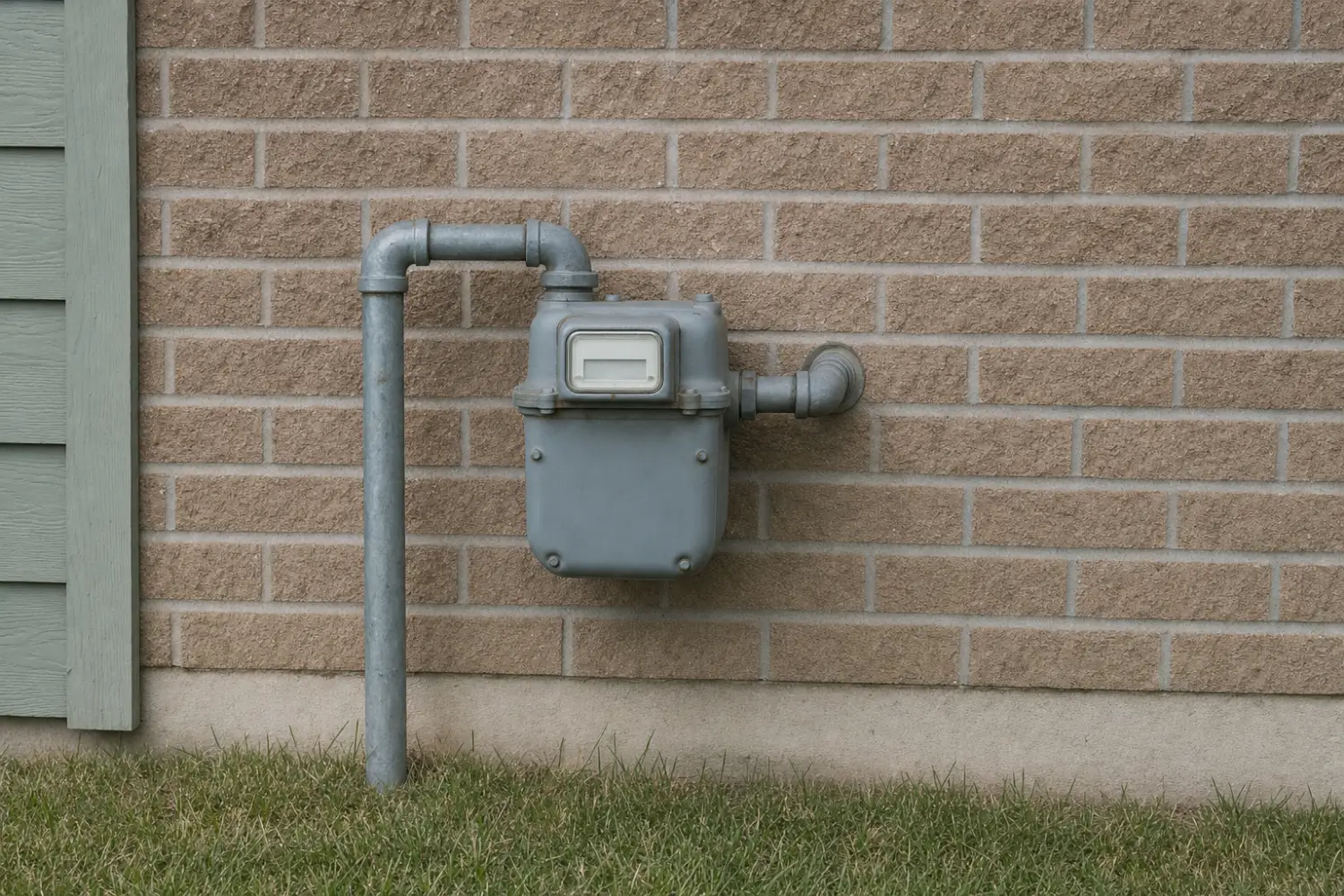
Under the federal definitions, a service line ends at the outlet of the customer meter or at the customer’s piping, whichever is farther downstream. With no meter, it ends at the piping.
The definition does not decide who is liable. When a gas line leaks inside a building, the gas company, a property owner, an installer or an appliance maker may be responsible.
Propane tank explosions follow different rules
A propane system that serves a single customer entirely on that customer’s premises is outside Part 192 of the federal pipeline rules. So is one that serves fewer than 10 customers with no part in a public place.
A propane tank explosion claim at a home or a business may rest on state negligence and product liability law. A propane explosion lawyer looks at who filled, installed and serviced the tank.
Leaking valves and bad fittings can set off a propane tank explosion, among the common causes of propane explosions.
Who may be responsible for a gas explosion
Depending on the source of the leak, the responsible party may be one of these, or several parties at once.
- The gas utility or pipeline operator
- A contractor or excavator who damaged a gas line
- A landlord or another property owner
- An installer or repair company
- The maker of defective equipment, such as an appliance or a valve
Gas explosion cases can involve multiple parties. Proving negligence generally means showing a duty of care, that the responsible party failed to use reasonable care, and that the failure caused your injuries and losses.
A government body can also be held liable where the law allows the claim, under its own notice rules and limits. Each of these parties can be a defendant in gas explosion negligence claims.
Catastrophic injuries from gas explosions
Explosions caused by gas can leave catastrophic injuries.
- Severe burns, such as third degree burns
- First degree burns
- Lung damage
- Broken bones and head injuries
Catastrophic burns and other devastating injuries from gas explosions can mean long hospital stays, rehabilitation and large medical bills. Survivors can also face emotional trauma.
An explosion can cause life altering injuries or even death. When a family member dies, the loved ones left behind may have a wrongful death claim, and state law sets who can file a wrongful death lawsuit with wrongful death lawyers.
Gas explosions at work
Workplace injuries raise their own questions, because work injury rules differ by state. Construction accidents are one example. A construction worker hurt when a crew strikes a gas line may have a claim against a company other than the employer.
Compensation after a gas explosion accident
A personal injury claim can cover physical and psychological harm. After catastrophic injuries, state law and the evidence decide which losses you can recover damages for.
- Medical bills, including future treatment the evidence supports
- Lost wages
- Pain and suffering
- Property damage claims for a destroyed home or damaged belongings
Fair compensation accounts for each loss the law allows, property damage included. No law firm can promise full compensation.
An injured person can seek compensation from each responsible party. After the death of loved ones, state law decides who can bring a wrongful death claim and seek compensation.
Filing deadlines for gas explosion lawsuits
The table shows the general rule in each state where Zinda Law Group has offices.
| State | General deadline for an injury lawsuit | Source |
|---|---|---|
| Texas | Generally two years | Tex. Civ. Prac. & Rem. Code 16.003 |
| New Mexico | Generally three years | NMSA 1978, 37-1-8 |
| Arizona | Generally two years | A.R.S. 12-542 |
| Colorado | Generally two years | C.R.S. 13-80-102 |
| Florida | Generally two years for a negligence claim that arose after March 24, 2023 | Fla. Stat. 95.11 |
These gas explosion deadlines are general rules as of October 2026. Each period generally runs from the day the claim accrues, and other kinds of claims can have a different period. A claim against a government body can need written notice, and sometimes the lawsuit itself, much sooner.
State-specific deadlines
Questions about how much time you have?
When you are ready
Talk through the next step.
Gas explosion lawyers by state and city
- Texas. Houston explosion injuries, Dallas gas explosions, San Antonio explosion lawyer, Austin explosion lawyer, Carrollton gas explosions, Corpus Christi explosion accidents, Fort Worth explosion lawyer, El Paso explosion lawyer, Temple gas explosions, Round Rock explosion lawyer
- New Mexico. Albuquerque explosion accidents, Santa Fe explosion accidents, Roswell explosion accidents, Las Cruces gas explosions
- Arizona. Phoenix explosion lawyer, Tucson explosion lawyer, Scottsdale gas explosions
- Colorado. Denver explosion lawyer, Fort Collins explosion lawyer, Aurora explosion accidents, Colorado Springs gas explosions
A free consultation with a gas explosion law firm
If an explosion injured you or your loved ones, start with a free case evaluation. A gas explosion attorney from our law firm will explain your options after the accident and the legal process.
Once you hire us, our legal team handles these complex cases while you focus on medical care.
Our firm works on a contingency fee basis, so there is no out-of-pocket cost to secure the legal representation you need.