



Commercial trucks are not defined by a single shape or size. The term covers everything from the delivery van that drops packages at your door to the 80,000-pound tractor-trailer hauling freight across three states overnight. What they share is a combination of weight, design, and business purpose that places them under a separate regulatory framework from ordinary passenger vehicles.
Vehicles with a gross vehicle weight rating above 10,001 pounds that are used for commerce are generally classified as commercial vehicles. Those exceeding 26,001 pounds typically require a commercial driver’s license, or CDL, to operate. The classification system used to sort these vehicles is based on Gross Vehicle Weight Rating, known as GVWR, which measures the maximum safe operating weight of the vehicle including cargo, passengers, and fuel.
Knowing the difference between these truck types matters for drivers, businesses, accident victims, and anyone trying to understand how these vehicles are regulated and why they pose unique risks on the road. Routes matter too, and our interstate and intrastate guide explains which trucking rules apply to a given carrier.
12 Common Types of Commercial Trucks
The vehicles below represent the most frequently encountered categories of commercial trucks across industries including construction, shipping, agriculture, energy, and municipal services.
Each type is built for a specific purpose, operates under specific regulations, and presents its own set of risks on the road:
1. Semi-Trucks (Tractor-Trailers)
Semi-trucks, also called tractor-trailers or 18-wheelers, are the backbone of long-distance freight transportation. They consist of a powered cab unit that pulls one or more detachable trailers, allowing cargo to be swapped without moving the cab.
These vehicles are Class 8 commercial trucks and can have a fully loaded weight of up to 80,000 pounds under federal regulations. Industries that rely on them include retail logistics, manufacturing supply chains, and interstate shipping. Because of their size and stopping distance requirements, semi-trucks are subject to strict federal oversight through the FMCSA. Following distance is a recurring issue for drivers rear-ended by a commercial truck, a situation we cover separately.
2. Box Trucks
Box trucks have an enclosed rectangular cargo compartment mounted directly to the frame, separate from the cab. They are among the most common commercial vehicles for local and regional deliveries.
Appliance retailers, moving companies, and local freight carriers all operate box trucks regularly. They typically fall into Class 3 through Class 6 depending on their size and load capacity. Drivers may or may not require a CDL depending on the specific vehicle’s GVWR.
3. Dump Trucks
Dump trucks are built around a hydraulic bed that tilts to deposit loose materials at a job site. They are a constant presence on construction and infrastructure projects across the country.
Common uses include hauling sand, gravel, asphalt, demolition debris, and soil. Standard dump trucks typically fall into Class 7 or Class 8 based on their load capacity. Their combination of heavy weight, limited visibility, and frequent movement in and out of active construction zones makes them a significant factor in work zone safety incidents.
4. Tow Trucks
Tow trucks are specialized commercial vehicles designed to move disabled, damaged, or illegally parked vehicles. They range from light-duty wreckers used for everyday roadside calls to heavy-duty recovery vehicles capable of righting overturned tractor-trailers.
Flatbed tow trucks, hook-and-chain trucks, and integrated lift trucks each serve different recovery scenarios. Tow truck operators frequently work on active roadways, which places them and the vehicles they assist in proximity to high-speed traffic.
5. Tanker Trucks
Tanker trucks are designed to carry liquids or gases in large cylindrical tanks mounted to the frame or trailer. The materials they transport range from fuel and water to hazardous chemicals and food-grade products like milk or corn syrup.
Fuel tankers are among the most commonly seen on major highways. Chemical transport tankers operate under strict hazardous materials regulations because a collision or spill can create risks far beyond the crash site itself.
Tankers present unique handling challenges due to liquid surge, which affects braking and stability during sudden stops or turns.
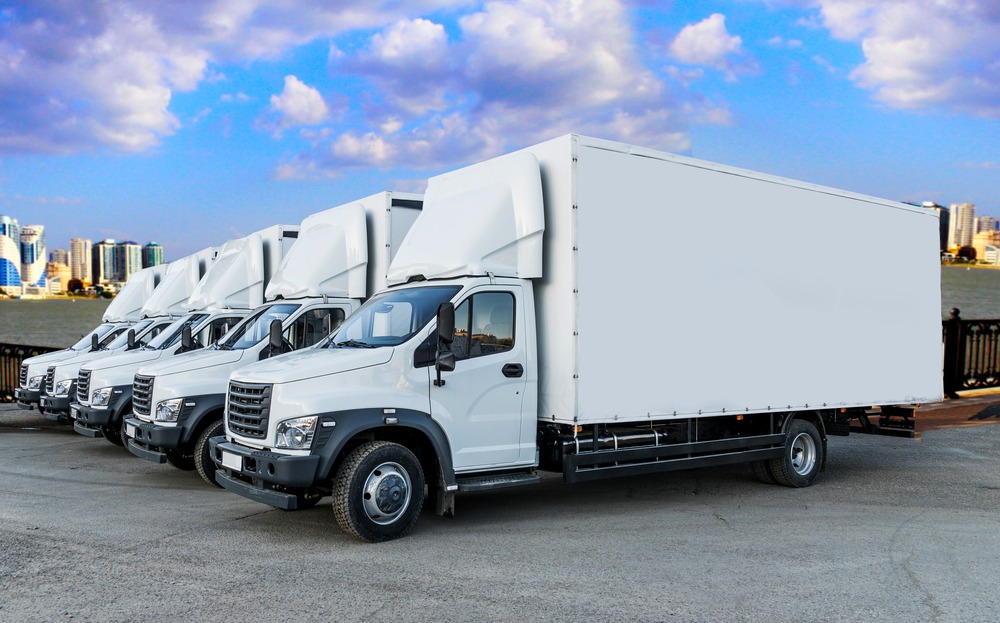
6. Delivery Vans and Step Vans
Delivery vans and step vans are medium-sized commercial vehicles built for frequent stop-and-go delivery routes in urban and suburban areas. Step vans feature a walk-in body with low step-up height, making it easy for drivers to exit and re-enter the vehicle dozens of times per shift.
Parcel delivery companies, food distributors, and retail supply chains rely heavily on this vehicle type. They typically fall into Classes 3 through 5. The volume of stops these vehicles make in residential and commercial areas means they are frequently interacting with cyclists, pedestrians, and passenger vehicles in tight spaces.
7. Garbage Trucks
Garbage trucks are heavy-duty commercial vehicles operated by municipal sanitation departments and private waste management companies. Most are equipped with compacting mechanisms that compress collected material to maximize load capacity before returning to a disposal facility.
They operate on fixed residential and commercial routes, typically during early morning hours. Their frequent stops, wide turning radius, and large blind spots make them a notable hazard in neighborhoods and urban corridors.
8. Cement Mixer Trucks
Cement mixer trucks transport and continuously mix concrete in a rotating drum while in transit, delivering it ready to pour at construction sites.
Once mixed, concrete has a limited usable window before it begins to set, which creates time pressure on both the driver and the receiving crew.
These vehicles fall into Class 8 and are among the heavier specialized trucks on the road. Their weight, slow maneuvering speed, and tendency to operate in and around active construction zones increase the likelihood of interaction with other vehicles in confined or congested areas.
9. Oilfield Trucks
Oilfield trucks are heavy-duty commercial vehicles used to support oil and gas extraction operations. They transport drilling equipment, pipe, fluid systems, and specialized machinery to and from drilling locations, which are often in remote areas connected by rural highways and county roads not designed for that level of weight.
These vehicles frequently operate on tight schedules in regions with heavy industrial traffic. Because many oilfield sites are in rural areas with limited lighting and emergency access, crashes involving oilfield trucks can be particularly severe.
10. Oilfield Water Haulers
Oilfield water haulers are tanker trucks specifically used to transport the large volumes of water required for drilling and hydraulic fracturing operations. A single fracking operation can require millions of gallons of water, and haulers make repeated trips along the same rural corridors to supply it.
The concentrated, repetitive use of roads not built for this traffic volume has been a documented concern in active oil-producing regions.
Driver fatigue is also a significant factor given the demand for continuous, round-the-clock hauling operations during active well completion.
11. Sand and Gravel Trucks
Sand and gravel trucks are large dump-style commercial vehicles used to transport construction aggregates from quarries, pits, and processing facilities to job sites. They are a primary component of road construction, foundation work, and infrastructure projects.
These vehicles are heavy at full load and frequently operate on mixed road types, moving between highways, county roads, and active work zones. Loose material falling from unsecured loads is a documented road hazard associated with this vehicle type.
12. Agricultural Trucks
Agricultural trucks cover a broad range of commercial vehicles used in farming operations. Grain haulers transport harvested crops from fields to storage or processing facilities. Livestock transport trucks move animals between farms, auctions, and processing plants. Flatbeds carry farm equipment and supplies across rural and highway corridors.
These vehicles often operate seasonally, with concentrated activity during harvest periods that places large numbers of heavily loaded trucks on rural roads in a short timeframe. Many agricultural trucks travel on roads with lower posted weight limits than the loads they carry, which creates additional regulatory considerations.
Hurt in a Crash Involving a Commercial Truck?
The type of truck involved in a crash affects how the investigation unfolds, which regulations apply, what evidence is relevant, and who can be held responsible. Identifying the vehicle class and its regulatory requirements is often one of the first steps in building a case. Before any of that, the truck accident checklist we put together covers what to do at the scene.
At Zinda Law Group, our legal team handles crashes involving all types of commercial vehicles, from delivery vans to fully loaded tractor-trailers and specialized oilfield equipment. There are no upfront fees.
If you or someone you love was seriously injured in a crash involving a commercial truck, contact us today for a free consultation.

John (Jack) Zinda
Founder / CEO
Over 100 years of combined experience representing injured victims across the country.
Available 24 / 7|Free Consultation
Neil Solomon
Partner
Real results matter. We do not get paid unless we win your case.
Available 24 / 7|Free Consultation