

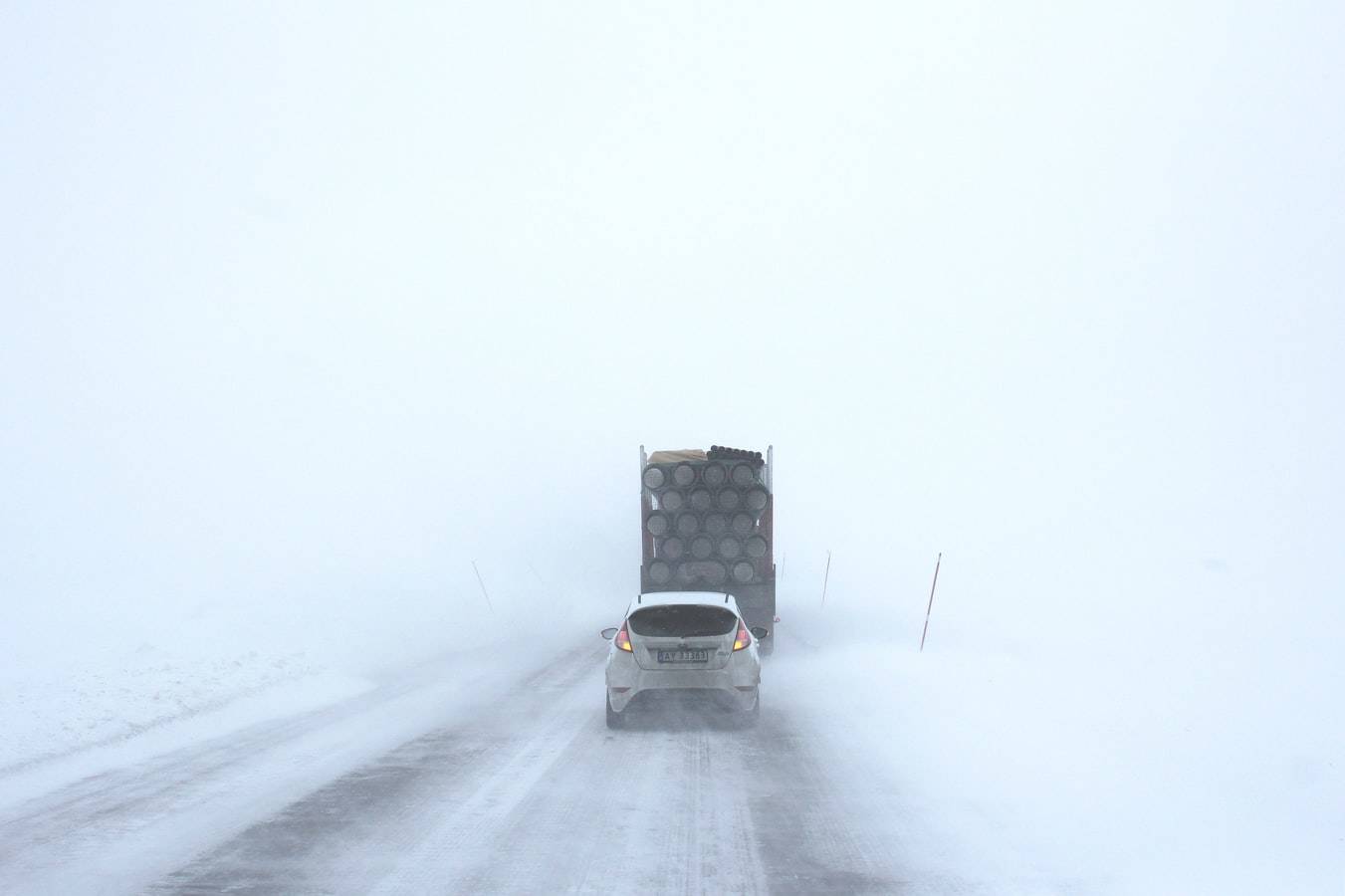
Fog does not excuse negligent driving.
Reduced visibility is a condition drivers are expected to adapt to. When someone drives too fast, follows too closely, or skips proper lighting in thick fog, they have made a choice. That choice has legal consequences.
Why Fog Does Not Automatically Excuse a Driver From Liability
Every driver carries a duty to operate their vehicle safely under the conditions they encounter. That duty holds in fog just as it does on a clear afternoon.
Dense fog is a known hazard. A driver who continues at highway speed through near-zero visibility has failed to respond to it.
Meeting the duty of care in fog means:
- Reducing speed significantly below the posted limit when visibility drops
- Increasing following distance to allow more reaction time
- Using low-beam headlights or fog lights to maximize visibility without creating glare
- Pulling off the road when conditions become too dangerous to continue
A driver who skips these adjustments and causes a crash has acted negligently, regardless of what the speed limit sign said.
Common Causes of Fog-Related Car Accidents
Most fog crashes come down to two things: speed and following distance.
Drivers frequently underestimate how much stopping distance extends when they cannot see far ahead. By the time a hazard becomes visible in thick fog, a vehicle traveling at normal highway speed may already be too close to stop.
Common scenarios include:
- Traveling at a speed that does not allow stopping before reaching the edge of visible range
- Following other vehicles so closely that any sudden slowdown causes impact
- Chain-reaction collisions where one rear-end crash triggers several more behind it
- Failing to notice stopped or slow-moving vehicles until impact is unavoidable
Speed is the single most common contributing factor in fog crashes. It is also the most frequent basis for a liability finding.
When Speed Becomes the Key Factor in Determining Fault
A driver can be at fault for speeding in fog even when traveling below the posted speed limit.
Speed limits represent a maximum for ideal conditions. They do not define safe speed for every situation.
The legal standard is “speed too fast for conditions.” Courts evaluate whether the driver could stop within the visible distance ahead. In thick fog, if a driver cannot see more than 50 feet, they should be able to stop well within that distance. At 60 mph, that is physically impossible.
The posted limit being 65 mph does not change the analysis.
A driver who could not stop within their visible range was traveling too fast. Any crash resulting from that inability is their responsibility.
Who Is Usually at Fault in Rear-End Collisions in Fog?
The rear driver is typically at fault. That principle applies with even more weight in fog.
Every driver is responsible for maintaining a following distance appropriate to their stopping ability. In fog, that means a much larger gap than on clear roads. Closing in on the car ahead because visibility is limited creates a situation where any surprise becomes a crash.
The lead driver can share fault for an unsafe sudden stop, but the rear driver’s failure to adjust for fog is the more common finding.
How Improper Headlight Use Can Affect Liability
High beams reflect off fog particles and create glare that reduces visible range. Low beams and dedicated fog lights direct light toward the road surface, where it improves visibility without bouncing back into the driver’s eyes. Using the wrong lights in fog contributes to the hazard.
A driver who uses high beams in heavy fog and then claims they could not see the vehicle ahead has contributed to their own visibility problem. That choice factors into a liability determination.
Driving without any lights in fog makes a vehicle nearly invisible to approaching traffic. If that contributed to another driver striking them, the lighting failure becomes part of the fault analysis.
When Multiple Drivers May Share Fault
Fog accidents often involve more than two vehicles. Fault can be distributed across several drivers.
Comparative fault rules allow responsibility to be divided based on each driver’s contribution to the crash. A multi-vehicle fog collision might involve:
- One driver speeding while another follows too closely behind
- A lead vehicle stopping suddenly while trailing vehicles are already too close to react
- Multiple drivers at unsafe speeds colliding in sequence
In Texas, a driver can recover damages as long as their share of fault is 50 percent or less. Their recovery is reduced by that percentage. A driver found more than 50 percent at fault recovers nothing.
When multiple parties may share liability, documenting every driver’s behavior at the scene is critical.
Talk With a Lawyer About Your Fog Accident
Fog accident liability depends on speed, following distance, lighting, and driver behavior. That analysis requires evidence gathered early.
At Zinda Law Group, our legal team investigates weather-related crash cases and pursues compensation for injured victims. There are no upfront fees. If you or someone you love was seriously hurt in a fog-related crash, contact us today for a free consultation.
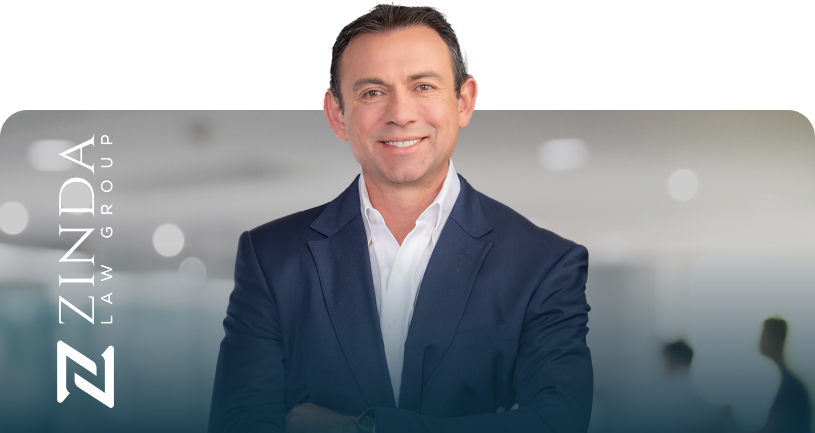
John (Jack) Zinda
Founder / CEO
Over 100 years of combined experience representing injured victims across the country.
Available 24 / 7|Free Consultation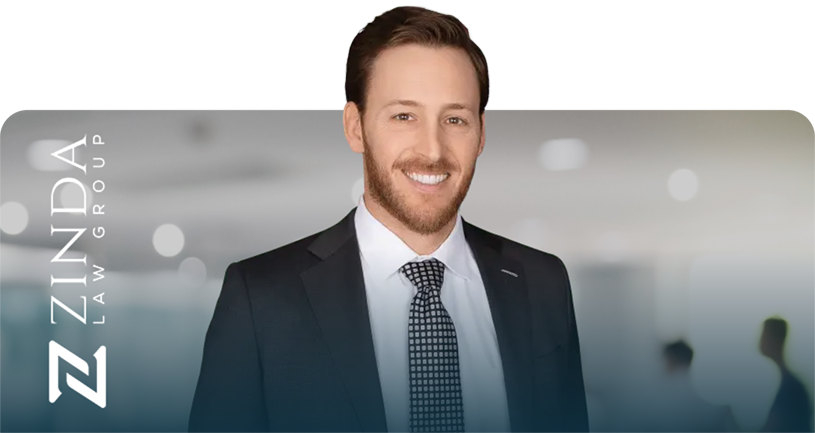
Neil Solomon
Partner
Real results matter. We do not get paid unless we win your case.
Available 24 / 7|Free Consultation