


Ice changes everything about driving. Stopping distances triple. Steering becomes unpredictable. A car that handles perfectly in dry conditions can become nearly impossible to control.
Liability for a crash usually depends on how drivers respond to those conditions. Drivers are expected to adapt their behavior when roads are hazardous.
When they do not, they can be held responsible for the crashes that follow.
Why Drivers Are Usually Responsible for Icy Road Accidents
The law does not lower its standard for drivers just because the weather is bad. A driver who ventures onto icy roads takes on the responsibility of driving in a way that reflects those conditions.
Courts use the “reasonable driver” standard. The key question is whether the driver responded to slippery conditions the way a reasonable, careful person would have. Driving at normal highway speed on a sheet of ice fails that standard, regardless of what the posted speed limit says.
Icy conditions demand slower speeds, greater following distances, and smoother inputs on the wheel and brakes. Drivers who ignore those adjustments and cause a crash typically bear liability for it.
How Driver Negligence Can Cause Winter Weather Accidents
Negligence in winter driving cases usually comes down to a driver failing to account for how much longer everything takes on ice. Braking, turning, and merging all require more time and space than on dry pavement.
Common negligent behaviors in icy conditions include:
- Driving at or near the speed limit when roads are visibly iced
- Following other vehicles too closely to stop safely on a slick surface
- Braking abruptly rather than applying gradual, steady pressure
- Making turns at speeds appropriate for dry roads
- Accelerating too quickly from stops, causing the vehicle to fishtail or spin
Each of these behaviors reflects a choice to ignore the conditions. Courts and insurance adjusters look at that pattern when evaluating fault.
When Poor Vehicle Maintenance Can Affect Liability
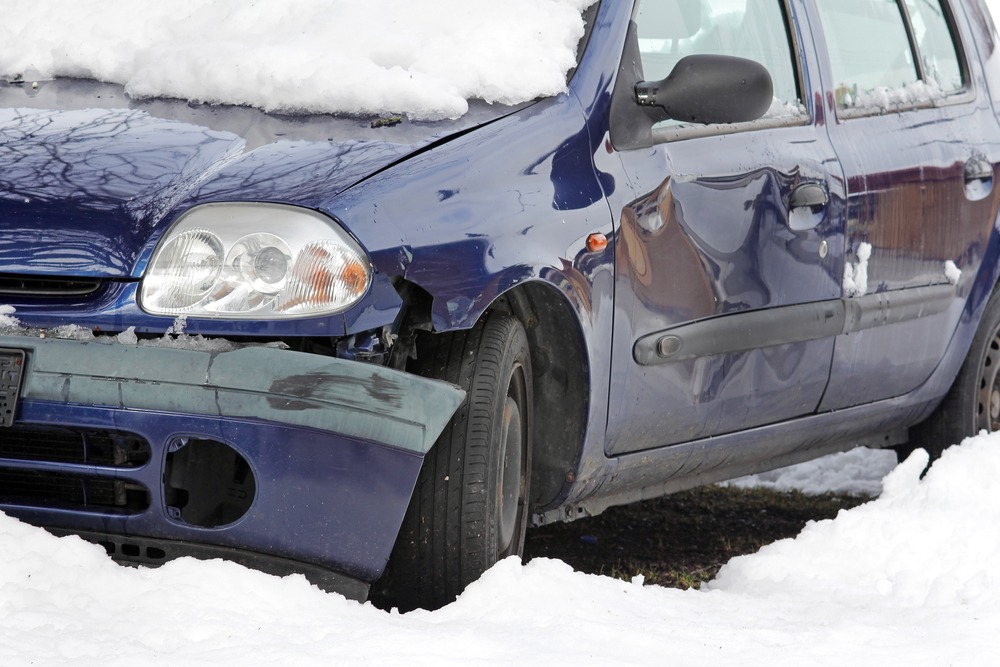
Liability can begin before a driver even reaches the crash site. Choosing to drive a vehicle that is unsafe for winter conditions is itself a form of negligence.
Drivers have a responsibility to ensure their vehicles can handle the roads they plan to travel. In winter weather, that standard becomes more demanding.
Vehicle conditions that can contribute to liability include:
- Bald or significantly worn tires with inadequate tread for wet or icy surfaces
- Brakes that are worn, unresponsive, or inconsistent
- Windshield wipers that cannot clear ice or precipitation effectively
- Headlights that are dim, misaligned, or nonfunctional in low-visibility conditions
A driver who gets behind the wheel knowing their tires are worn down, then loses control on ice, carries direct responsibility for that choice. The vehicle condition becomes part of the negligence analysis.
When Another Driver May Be Responsible for the Crash
Not every icy road crash involves only one car. When a collision involves multiple vehicles, the question shifts to which driver’s conduct caused the impact.
A driver who slides into another vehicle on ice can still be held liable. If their speed, following distance, or driving behavior contributed to losing control, the icy road is a condition, not an excuse.
Common multi-vehicle winter crash scenarios include:
- A driver sliding through an intersection and striking a car that had the right of way
- A vehicle losing control on a highway and crossing into oncoming traffic
- A rear-end collision caused by a following driver who could not stop in time due to excessive speed
In each of these, the at-fault driver made choices that led to the crash. The ice was a factor. The driver’s behavior was the cause.
When Government Agencies May Share Responsibility
Government agencies are responsible for treating and maintaining public roads during winter weather events. In limited circumstances, they can share liability when a road was left in a dangerous condition they had a reasonable opportunity to address.
This is a high bar to clear.
Government entities are given reasonable time to respond to reported conditions before liability attaches. Liability may arise when:
- A road remained untreated for an extended period after an ice event was reported
- A known hazardous stretch of road received no treatment or signage
- A maintenance failure, such as a broken de-icing system, contributed to the dangerous condition
Claims against government agencies also involve procedural hurdles. Most require a formal notice of claim filed within a short window after the accident, often well before the standard personal injury filing deadline. Missing those deadlines can permanently bar a claim.
How Comparative Fault Can Affect Winter Accident Claims
Many states, including Texas, apply comparative fault rules to accident claims. This means more than one party can share responsibility for the same crash, and compensation adjusts accordingly.
In a winter accident, comparative fault might look like this: one driver was speeding for icy conditions, while the other was following too closely and also contributed to the collision. Both drivers carry some share of fault. Each person’s compensation is reduced by the percentage of responsibility assigned to them.
In Texas, a driver who is found more than 50 percent responsible for the crash is barred from recovering damages. That threshold makes accurately assigning fault critical. A driver who was partially at fault can still recover if their share stays below that line.
This is why documentation and early investigation matter so much. Comparative fault determinations depend heavily on the evidence gathered after the crash.
Evidence Used to Determine Liability in Icy Road Accidents
Establishing who is at fault in a winter accident requires pulling together evidence that shows what the road was like and how each driver responded to it.
Useful evidence includes:
- The official police accident report documenting road conditions and initial fault observations
- Photographs of the crash scene showing ice, skid marks, vehicle positions, and damage
- Weather records and temperature data for the time and location of the crash
- Traffic camera or dashcam footage capturing vehicle speeds and movements before impact
- Witness statements from other drivers, pedestrians, or bystanders who saw the conditions
- Vehicle inspection records showing the condition of tires, brakes, and other safety components
The pattern of physical evidence tells the story of what happened. Long skid marks in the wrong lane suggest speed inappropriate for the conditions. No skid marks at all may suggest a driver never attempted to brake.
What to Do After an Accident on an Icy Road
The conditions that caused the crash can change quickly. Ice melts. Other vehicles disturb the scene. Act fast to preserve the evidence.
At the scene:
- Move to a safe location if the vehicle is driveable and staying puts you at risk of being struck
- Call law enforcement and wait for an official report to be filed
- Photograph the ice, skid marks, vehicle positions, and any damage before anything moves
- Note weather conditions, road treatment status, and any visible signage or warnings
- Collect contact information from any witnesses
After leaving the scene:
- Seek medical attention promptly, even for injuries that seem minor
- Do not give recorded statements to any insurance adjuster before speaking with an attorney
- Contact a personal injury lawyer as soon as possible
Icy road cases involve contested facts and multiple potential defendants. Early legal involvement helps ensure the right evidence is preserved and the right parties are identified before records disappear.
Talk With a Lawyer About Your Winter Weather Accident
Icy road accidents are rarely simple. Fault can be shared, government entities may be involved, and the evidence window is short.At Zinda Law Group, our legal team investigates winter weather crashes, identifies every responsible party, and helps injured victims pursue full compensation. There are no upfront fees. If you were seriously hurt in a crash on an icy road, contact us today for a free consultation.

John (Jack) Zinda
Founder / CEO
Over 100 years of combined experience representing injured victims across the country.
Available 24 / 7|Free Consultation
Neil Solomon
Partner
Real results matter. We do not get paid unless we win your case.
Available 24 / 7|Free Consultation