













An oilfield truck accident lawyer handles crashes involving the commercial vehicles used in oil and gas operations, such as tankers, frac sand haulers, water trucks and crew vans, on roads in Texas and New Mexico. The claim depends on who was hurt. An oilfield worker who was driving or riding for work usually has a workers’ comp claim and may also have a claim against another company. A motorist hit by an oilfield truck brings a personal injury claim against the driver, the trucking company or another company at fault.
The first question in a free consultation with Zinda Law Group is who owned the truck. The next is how the accident happened.
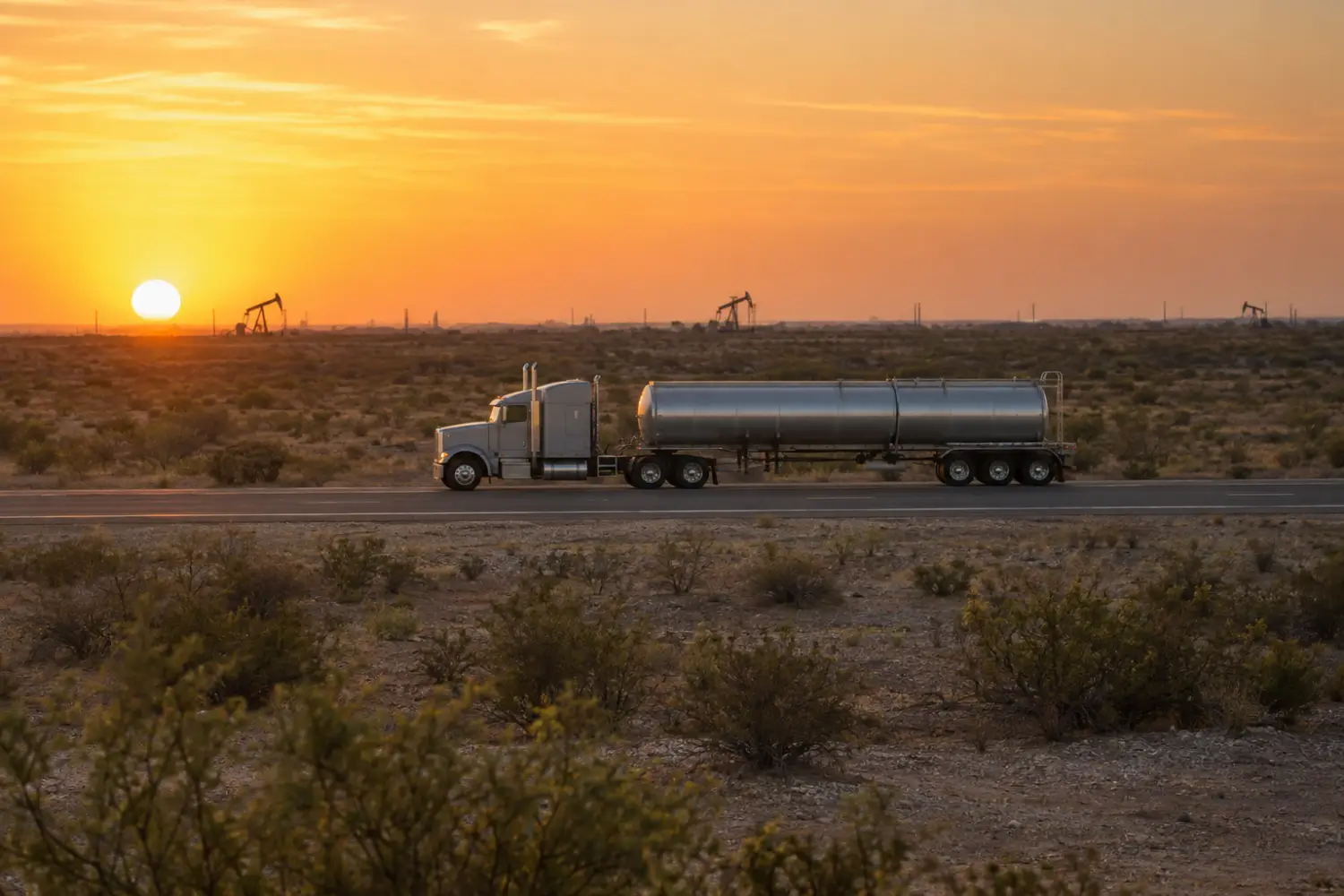
Article summary
Key things to know
- The claim depends on who was hurt: a worker driving or riding for work, or a motorist hit by an oilfield truck.
- A worker usually has a workers’ comp claim and may also have a claim against another company.
- Oilfield hauling gets special hours-of-service provisions under federal and Texas rules.
- An oil field accident on the road often involves several companies, each with its own insurance company.
- Trucking records can be lost within months of the crash.
What an oilfield truck accident lawyer does after a crash
An oilfield truck accident lawyer starts by identifying every company connected to the truck. One company may own the tractor and another may employ the driver. A third may have loaded the trailer at the job site. The oil and gas companies that ordered the load can matter too.
Oilfield truck accident cases turn on Federal Motor Carrier Safety Administration (FMCSA) rules as well as state law. The next job is evidence. Electronic logging device (ELD) data, dispatch records, maintenance files and the post-accident drug and alcohol test all sit with the trucking company. A lawyer asks the company in writing to keep them, because some of those records only have to be kept for months.
Oil field accident lawyers also sort out which claims exist. A driver hurt on a lease road may have a workers’ comp claim and a third-party claim at the same time. A family hit on a state highway has no comp claim and no comp limit. At the well pad, explosions, fires and falls are also recorded causes of worker deaths (CDC). Those well site oilfield injuries belong with an oilfield injury lawyer, and our oilfield injury page covers them. This page covers the road.
Free case review
Unsure whether an oilfield truck crash may qualify?
Oilfield truck crashes often involve more than one company. We start with who owned the truck and whether the carrier followed federal safety rules.
Oilfield trucks in the oil and gas industry
Across the oil and gas industry, crude, produced water, frac sand, pipe and crews all move by road, often on two-lane highways and caliche lease roads built for lighter traffic. Oil and gas drillers and service crews depend on those loads arriving on schedule.
The Texas Department of Transportation (TxDOT) counted nearly 79,000 crashes in the five major Texas energy regions in 2024. Those crashes killed 1,023 people, about one in four of all Texas traffic deaths. The Permian Basin alone had 25,309 crashes, 320 deaths and 915 serious injuries. The Eagle Ford Shale had 14,518 crashes and 173 deaths. These counts cover all crashes in those regions, not only oilfield accidents involving trucks.
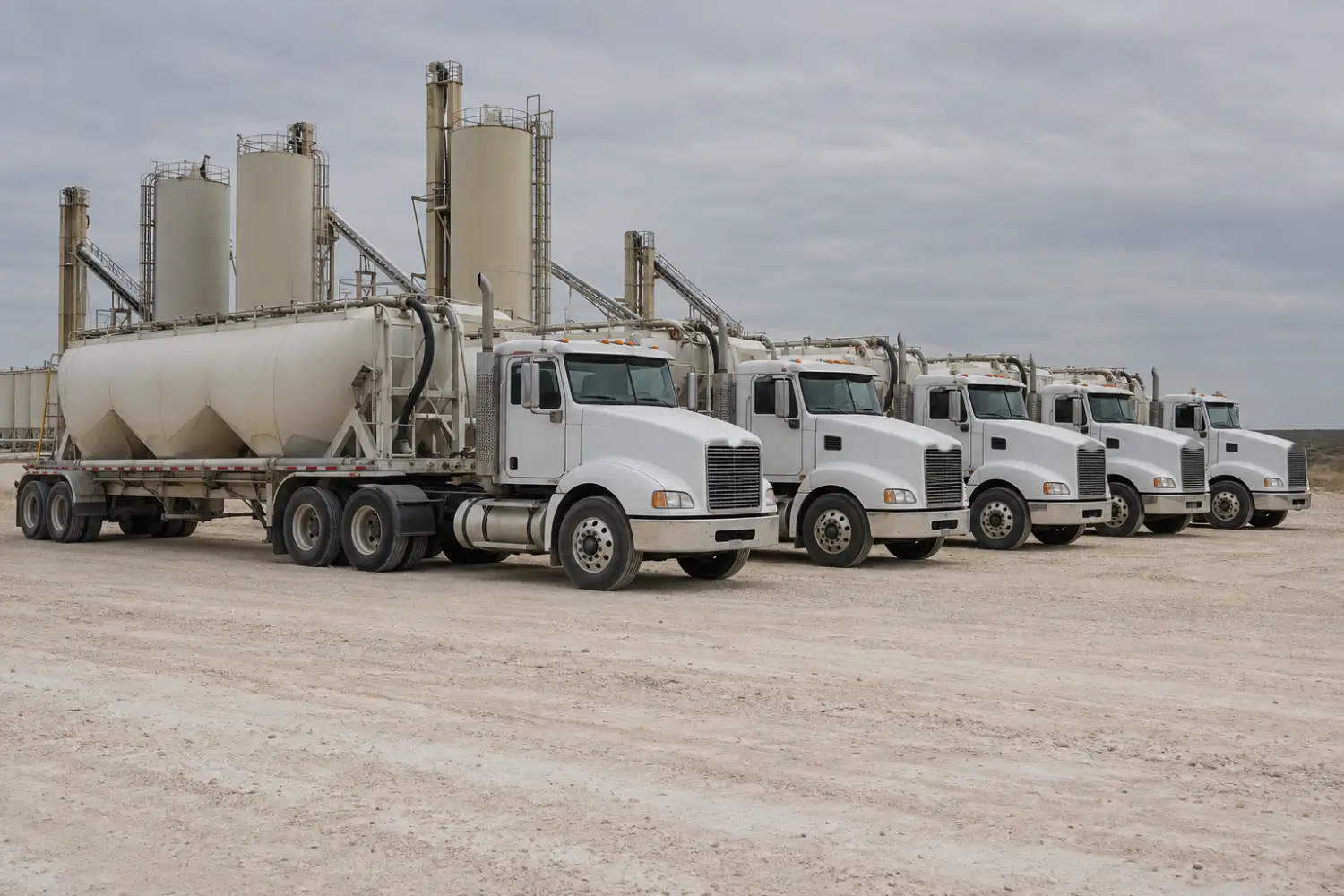
Crude oil tankers
Tankers haul crude and condensate from tank batteries to pipelines and terminals. A loaded tanker is heavy and its liquid load can shift in a curve. A rollover can spill crude and start a fire, which turns a road crash into an oil field accident with burn injuries.
Frac sand haulers
Frac sand trucks run sand from the mine or rail yard to the well pad on tight delivery schedules. OSHA says workers who inhale silica from fracking sand face a higher risk of silicosis, lung cancer, COPD and kidney disease. Workers who handle fracking chemicals can also suffer chemical burns and inhale toxic vapors.
Water trucks and vacuum trucks
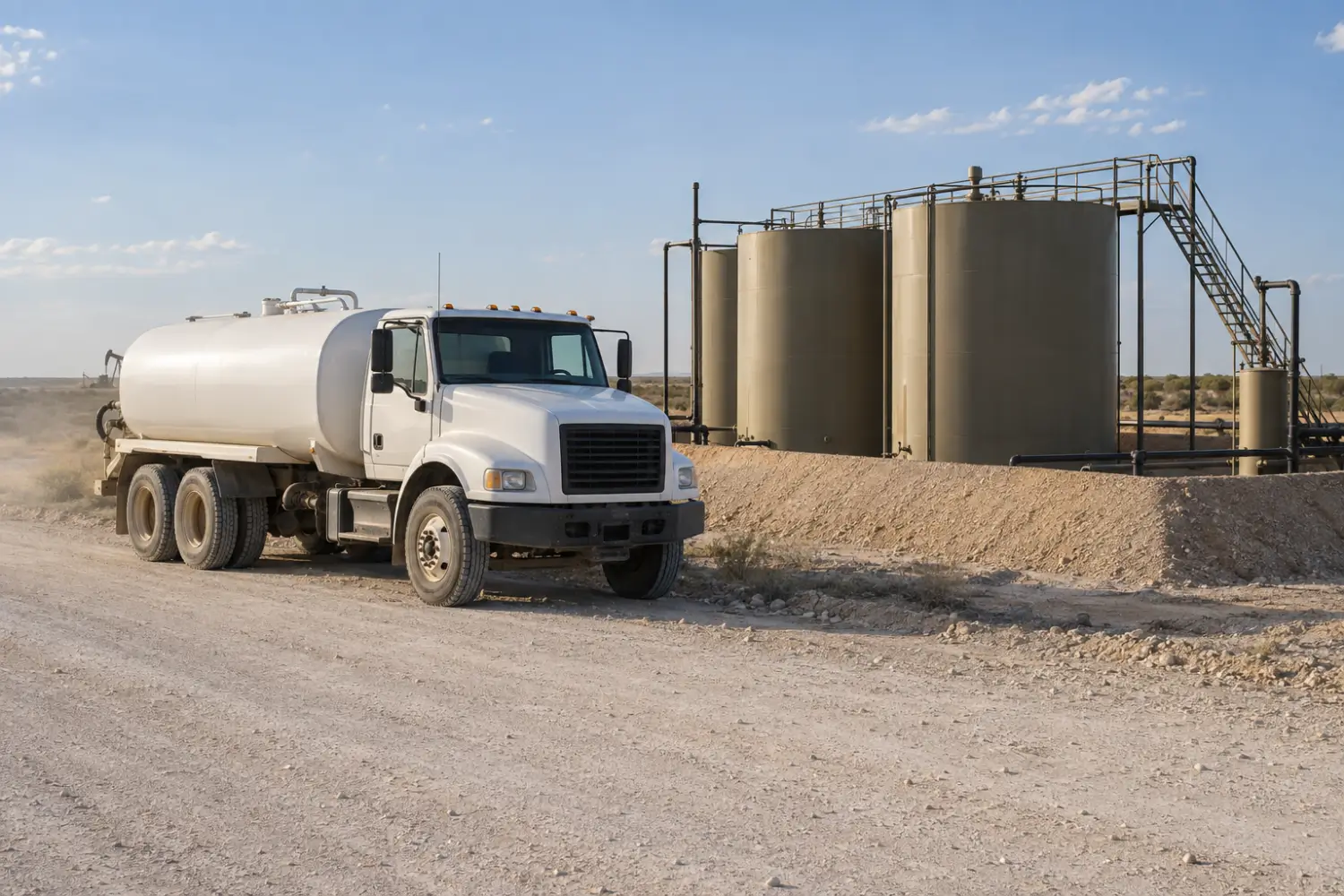
Water trucks bring fresh water for drilling and completion. Vacuum trucks haul produced water and fluids away from the well. Both make repeated trips on the same lease roads, often at night, and oilfield workers on those routes share the road with local traffic.
Crew vans and pickups
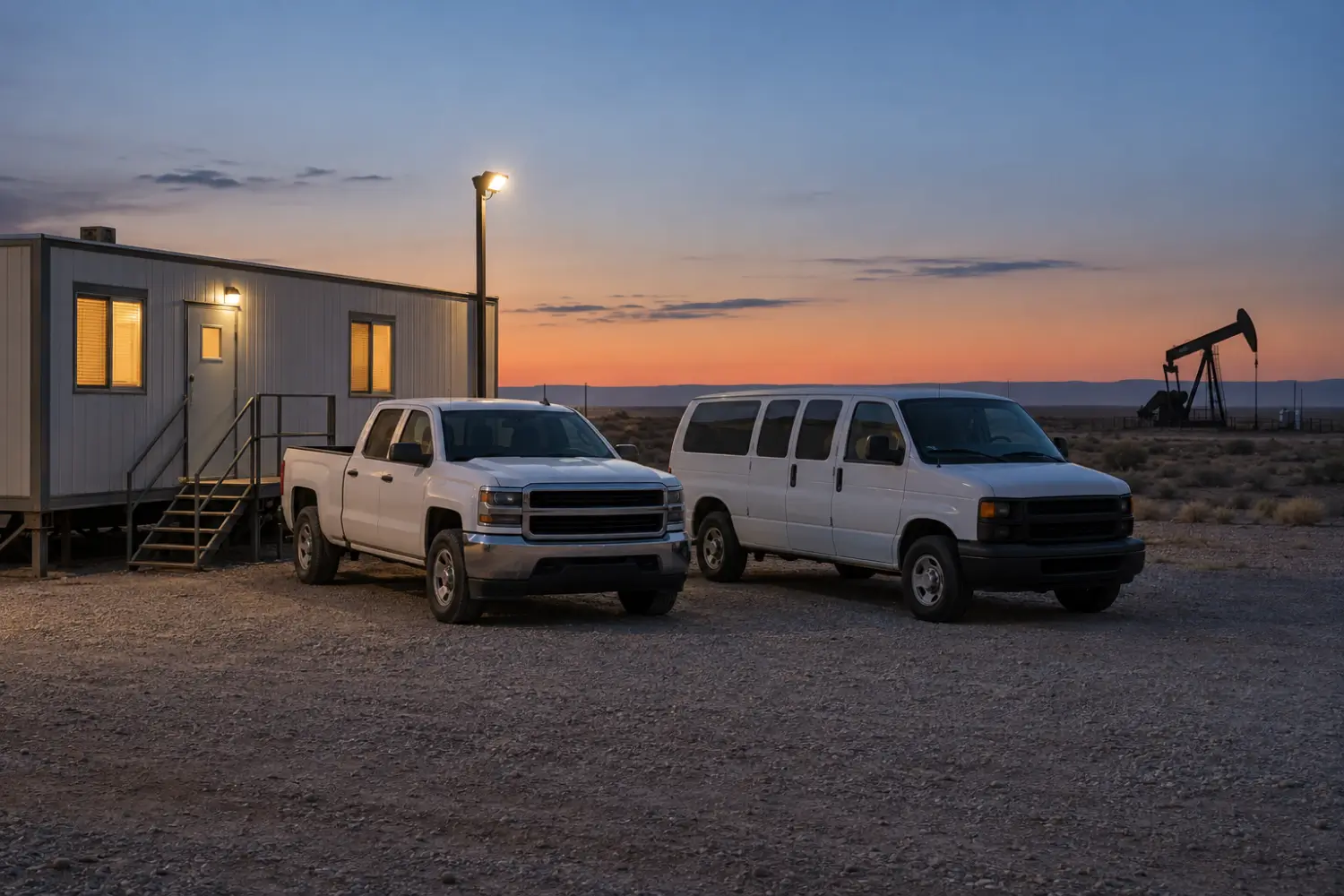
Oilfield workers ride to remote locations in company pickups and vans, and oilfield companies often run crews on long shifts far from town. When CDC researchers checked Texas crash records for 2017 to 2019, they found 56 oil and gas worker crash deaths that their other data sources missed. Half involved a pickup truck, and 41.1 percent involved a semitrailer, tractor trailer or trailer truck. In 51.8 percent a seat belt was not worn. Crashes on public roads generally do not have to be reported to OSHA, which is one reason these deaths go uncounted.
Common causes of oil truck accidents
Most oil truck accidents trace back to a short list of failures, and one crash can involve several.
- Fatigue and long shifts. Oilfield drivers work long rotations, and the hours rules allow long days. Fatigue raises crash risk, and a tired truck driver reacts late.
- Poor maintenance. Brakes, tires and lights take heavy wear on unpaved lease roads. Federal rules require carriers to inspect, repair and maintain their trucks.
- Loading and shifting cargo. An overfilled tanker or an unbalanced trailer can roll in a curve.
- Road and site conditions. Lease road entrances, dust, soft shoulders and unlit intersections all add risk.
- Missing or unused safety gear. Proper safety equipment includes working seat belts, lights and backup alarms on every truck.
- Driver qualification and dispatch. The carrier decides who drives and how tight the schedule runs. The driver file and dispatch records show both.
Transportation incidents are the leading cause of death for oil and gas workers, with 40.3 percent of oil and gas extraction worker deaths from 2003 to 2013 (CDC). BLS counted 28 transportation deaths among the 65 deaths in drilling and oilfield support companies and operators in 2024. Road crashes are among the common oilfield accidents that kill workers, next to rig floor injuries and gas accidents at the well. OSHA lists vehicle collisions among the main safety hazards in oil and gas extraction, with falls, explosions and fires, and high-pressure lines. OSHA also notes that equipment not designed, installed and maintained properly can expose workers to hazardous energy.
Hours-of-service rules and the oilfield exception
Hours-of-service rules limit how long a truck driver may drive and work. Oilfield hauling in the oil and gas industry gets special provisions under both federal and Texas rules, and a lawyer checks which set applied to the truck.

Federal limits for interstate trucks
Under 49 CFR 395.3, a property-carrying driver may generally drive 11 hours inside a 14-hour window that starts after 10 consecutive hours off duty. A 30-minute break is required after 8 hours of driving. On-duty time is capped at 60 hours in 7 days or 70 hours in 8 days. A 34-hour break restarts that count.
The federal oilfield provisions
Federal rules give oilfield drivers two provisions under 49 CFR 395.1(d). A driver used exclusively to haul oilfield equipment or service oil and gas field operations may restart the weekly on-duty cycle after 24 hours off duty. For specially trained drivers of rigs built to service oil wells, waiting time at the well site is recorded as off duty and does not count toward the 14-hour window. FMCSA guidance says the restart requires work exclusively in the oilfield for each 8-day period.
Texas rules for trucks that stay in Texas
Many Texas oilfield trucks never cross a state line. For those, Texas replaces the federal driving limits with its own. An intrastate driver may drive 12 hours after 8 hours off duty and may not drive after 15 hours on duty or after 70 hours in 7 days. A Texas driver used exclusively in oilfield hauling may restart the 7-day period after 24 hours off duty (37 Tex. Admin. Code 4.12).
These provisions are legal, and a driver who used them did not break a rule. The logs still show how long the driver had worked. A driver who went past the limits did break one, and ELD records usually answer that question.
Workers’ compensation claims for injured oilfield workers
Injured oilfield workers who were driving or riding for work usually start with workers’ compensation claims. The employer’s coverage decides what else is possible.

Workers’ compensation benefits
If a Texas employer carries workers’ compensation insurance, benefits are generally the only remedy against that employer and its employees. Workers’ compensation benefits cover medical care and income benefits, plus death and burial benefits after a fatal crash. Temporary income benefits replace only part of lost pay, generally 70 percent of lost weekly earnings. Texas caps them at $1,271 a week for injuries from October 1, 2025 to September 30, 2026, and $1,314 a week for injuries from October 1, 2026 to September 30, 2027 (Texas Department of Insurance). That cap is the maximum compensation for temporary income benefits, however high the worker’s wages were. Comp does not pay for pain and suffering. New Mexico comp is also generally the exclusive remedy against an insured employer.
That rule matters in a crew van crash. In Texas, oil field workers injured while a coworker drove are generally limited to comp benefits from an employer that carries coverage.
Claims oil and gas workers can bring against another company
Workers’ comp protects the employer. It does not protect every company on the road. Injured oil field workers may pursue workers’ compensation claims and also sue a third party whose negligence caused the crash, such as another trucking company or the maker of a failed part. The comp insurer is generally repaid from that recovery, so workers’ compensation claims and lawsuits are handled together. New Mexico law keeps claims against other responsible parties open in the same way.
Oil field injury claims against a third party are where injured workers can recover pain and suffering. Oilfield injury claims against more than one company can follow a crash on the road. That is why an oilfield accident lawsuit against another company is checked early in every case.
If the employer is a Texas nonsubscriber
Texas does not require most private employers to carry workers’ compensation insurance. A Texas oilfield worker hurt in a company truck can sue a nonsubscriber employer for negligence. The employer cannot argue that the worker was partly at fault or that a co-worker’s negligence caused the crash. The worker still has to prove the employer was negligent. Our page on Texas nonsubscriber claims explains these cases. An oil field injury attorney can check whether the employer carried coverage on the day of the crash.
What to look for in an oilfield truck accident lawyer
Oilfield truck accident cases involve more companies and more rules than a typical car crash, because the oil and gas industry adds its own contracts on top of trucking law. A few checks help when choosing among oilfield accident lawyers.
- Trucking rules. The lawyer should know the federal motor carrier rules and the Texas intrastate rules that apply to oilfield hauling.
- Speed on evidence. Preservation letters should go out within days of an oil field accident, before logs and test windows close.
- Consultants. Crash reconstruction and trucking safety consultants are often needed to read the data.
- Trial readiness. Ask whether the lawyer prepares truck cases for trial, because insurers weigh that when they make offers.
Motorists and other oilfield accident victims on the road
Oilfield accident victims who were not on the job have no workers’ comp claim and no comp limit. Insurance companies often contact truck crash victims within days and ask for a recorded statement. A driver, passenger, cyclist or pedestrian hit by an oilfield truck brings a personal injury claim against whoever caused the crash. Serious injuries to a motorist, such as crush injuries or a brain injury, often mean months of medical care.
Under Texas law, an employer is vicariously liable for its employee’s negligent acts within the course and scope of employment. In Painter v. Amerimex Drilling I, Ltd. (Tex. 2018), a drilling company’s employee was driving its crew from a Pecos County drilling site in West Texas to company housing when the crash happened. The Texas Supreme Court held that the drilling company was not entitled to summary judgment on vicarious liability. A company that hires an independent contractor is generally not liable for the contractor’s negligence, so the driver’s status gets checked early.
Fault also matters in every oil field accident. In Texas, a person found more than 50 percent responsible cannot recover, and a smaller share reduces the recovery. New Mexico reduces the recovery but does not bar it. Our pages on Texas truck accident claims and New Mexico truck crash claims cover highway crashes of every kind.
Who can be liable for oilfield truck accidents
Oilfield accidents with trucks rarely have a single cause. An oil field accident on the road often involves several companies. Each may have its own insurance company, and each may point at the others.
The truck driver and the trucking company
The truck driver answers for careless driving. The trucking company can answer for an employee driver’s negligence on the job. Its maintenance records, driver files and dispatch logs show whether its own safety failures played a part.
Oil and gas companies and contractors
Oil and gas companies and their contractors set delivery schedules and load trucks at the pad. A company that directs the work or loads the trailer can share fault for a crash its choices caused. Most oilfield deaths involve contractor crews (CDC), so more than one contractor is often in the chain.
Maintenance shops and manufacturers
A brake shop that did a bad repair can be liable for a crash the repair caused. So can the maker of a defective tire, trailer, coupling or other complex machinery on the truck. Our page on defective equipment covers product claims.
Evidence that builds an oil field accident case
Trucking evidence runs on short clocks, and the trucking company holds most of it. An oil field accident case built on those records starts with a written request to preserve them. Many oilfield accident cases involving a truck turn on what the logs and maintenance files show, and an oil field injury lawyer usually sends that request within days.

- Driver logs and ELD data. Carriers must generally use an ELD and keep drivers’ duty records and supporting documents for at least 6 months.
- Maintenance records. Carriers must keep inspection and maintenance records for 1 year where the truck is housed. They must keep them 6 months after the truck leaves their control.
- Post-accident testing. After a fatal crash, the employer must test a surviving commercial driver for alcohol and drugs. Alcohol testing stops if it is not done within 8 hours, and drug testing within 32 hours.
- Dispatch and load records. Tickets, run sheets and messages show the schedule the driver was held to.
- Scene evidence. Photographs, dashcam video, the police crash report and witness names.
Employers must report a work-related death to OSHA within 8 hours, but a crash on a public road usually never reaches OSHA at all.
Serious injuries from oilfield truck accidents
A loaded oilfield truck is far heavier than a passenger car. The common injuries suffered in these oil field accident cases are severe injuries, and many are serious and fatal injuries.
- Traumatic brain injuries (TBI). Head impacts in a rollover, an underride crash or a fall from a trailer can cause traumatic brain injuries that affect memory and work.
- Spinal cord injuries. A rollover or a fall from heavy equipment can cause spinal cord injuries and partial or full paralysis.
- Crush injuries and fractures. Crush injuries to the chest, pelvis and legs often need several surgeries, and some end in amputation.
- Burns. A ruptured tanker can burn or explode, and burns may need grafts and long medical treatment.
Severe injuries like these bring medical bills and lost wages that last for years for injured workers and motorists alike. Broken bones and internal injuries are among the common injuries in oil field accident claims. An injured driver or passenger should get immediate medical treatment the same day, because some brain and internal injuries show symptoms later. Medical records made close to the crash are strong evidence of what the crash caused.
Fatal injuries leave families with a wrongful death claim. Our pages on Texas wrongful death law and fatal truck accidents explain who can file.
Damages and fair compensation after an oilfield truck accident
Fair compensation in oil field injury cases depends on the claim path. Workers’ comp pays set medical and income benefits. A personal injury lawsuit against a third party or a nonsubscriber employer can recover compensation across the full range of damages.
- Economic damages. Medical expenses, future medical expenses, lost income and future lost wages. Under Texas law, recovery of medical expenses is limited to amounts actually paid or incurred. Medical bills and lost wages are often the first pressure oilfield workers and their families feel.
- Non-economic damages. Physical pain, mental anguish, physical impairment and disfigurement. Workers’ comp does not pay non-economic damages.
- Exemplary damages. In a Texas injury case, exemplary damages require clear and convincing proof of fraud, malice or gross negligence and a unanimous jury. Texas caps them by statute. New Mexico allows punitive damages for malicious, willful, reckless or wanton conduct.
What to do after oilfield accidents on the road
The first days after oil truck accidents shape recovery and any oil field injury claims that follow.
- Get medical care. Treatment comes first and starts the medical record.
- Call the police and report the oil field accident to the employer in writing. Keep a copy of the report and note who received it.
- Photograph the scene. Capture the truck, its company name and DOT number, the road and any injuries.
- Get names. A list of witnesses, the driver and anyone from the oil and gas company at the scene helps the investigation.
- Keep every document. Medical records, pay stubs and letters from any insurance company matter.
- Do not sign a release or give a recorded statement. Statements to an insurer can be used to limit the claim. Let an oilfield truck accident lawyer review it first.
State-specific deadlines
Questions about how much time you have?
Deadlines to file after an oilfield truck accident
Every claim after an oil field accident on the road has a filing deadline, and the clocks differ by state and by claim.
| Claim | Texas | New Mexico |
|---|---|---|
| Personal injury lawsuit | Generally two years from the injury (Tex. Civ. Prac. & Rem. Code 16.003(a)) | Generally three years (NMSA 1978, 37-1-8) |
| Wrongful death lawsuit | Generally two years from the date of death (Tex. Civ. Prac. & Rem. Code 16.003(b)) | Generally three years from the date of death (NMSA 1978, 41-2-2) |
| Workers’ comp notice to the employer | 30 days from the injury | 15 days, or up to 60 days if the injury prevented notice |
| Workers’ comp claim | One year from the injury, or from the death for death benefits | One year after the employer or insurer fails or refuses to pay, or from the death |
| Shared fault | Barred above 50 percent (Tex. Civ. Prac. & Rem. Code 33.001) | Pure comparative fault |
General rules current as of September 2026. Exceptions apply.
An oil field injury lawyer can confirm which dates apply before any of them runs out. Oilfield deadlines vary by state, including between Texas and New Mexico, so the state where the crash happened matters. A free consultation is available at (800) 863-5312.
When you are ready
Talk through the next step.
How Zinda Law Group handles oilfield truck accident claims
Zinda Law Group’s oilfield accident lawyers handle claims for oilfield workers and motorists across West Texas and the Eagle Ford. The firm also covers the New Mexico side of the Permian Basin. We do not get paid unless we win your case.
The legal team requests the logs, maintenance files and test results and identifies every company tied to the truck. The legal team then measures the losses once treatment is underway. Many claims settle with the insurance company, but an early offer often comes before the full cost of the injuries is known. A case that does not settle for fair compensation can go to trial.
When an oil field injury lawyer takes the case
Oilfield accident lawyers at the firm handle Texas oilfield cases on the road and at the pad. An oilfield injury lawyer on our well site injury team handles oilfield injuries at the pad. The firm’s Texas oilfield practice also covers oil rig accidents, oilfield wrongful death and fracking accidents.