

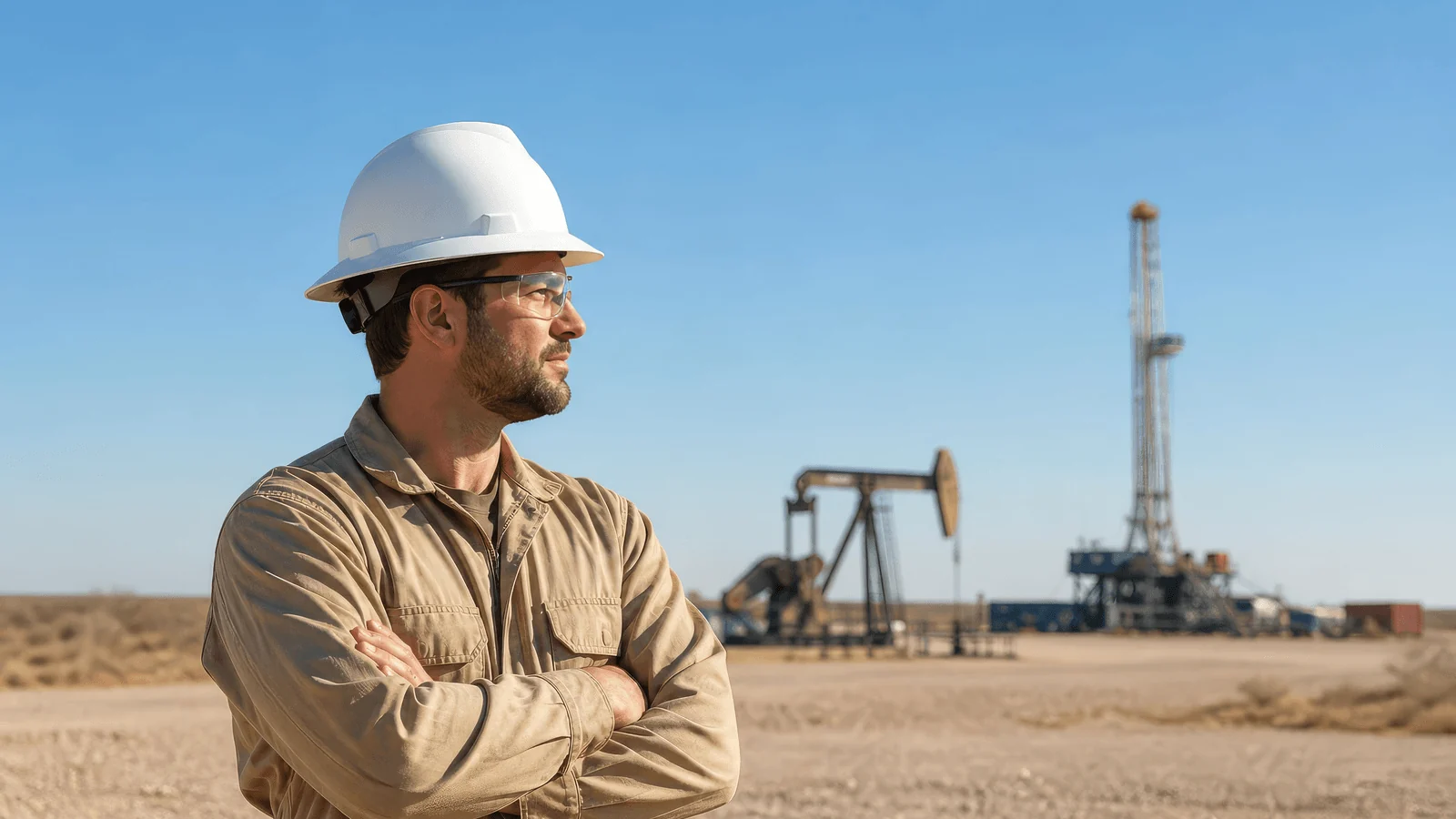
Yes, working on an oil rig is dangerous. Land rig work in the oil and gas industry carries risks that workers and families in the Permian Basin should understand. OSHA identifies hazards involving heavy machinery, high-pressure equipment, vehicle traffic, and flammable well gases and vapors.
A NIOSH MMWR report found 470 oil and gas extraction worker deaths nationwide from 2014 to 2019: 26.8 percent involved vehicle incidents, 21.7 percent involved contact injuries such as struck-by and caught-between events, and 14.5 percent involved explosions. These are national industry findings, not a land-only count or a ranking of nonfatal oilfield injuries.
This article covers land oilfield work. The information here is general and educational. It is not legal advice and does not create an attorney-client relationship.
What makes land oil rig work so dangerous in the Permian Basin?
The danger at a land well site comes from heavy machinery, flammable gases and vapors, high-pressure drilling and completion systems, and vehicle traffic, all hazards OSHA identifies. Workers can encounter these hazards on the drilling platform, around production equipment, and while traveling between locations.
The Texas Railroad Commission describes the Permian Basin as covering West Texas and the adjoining area of southeastern New Mexico. That regional focus includes workers and families in Midland, Odessa, Hobbs, and Carlsbad.
NIOSH found that the Permian Basin accounted for 148 deaths, or 31.5 percent of the 470 deaths identified nationwide from 2014 to 2019. It had the most deaths of any basin in the study. That count does not establish which basin had the highest risk per worker.
Common oilfield and land rig jobs exposed to these hazards
Land oilfield hazards affect drilling crews, well servicing crews, drivers, and workers checking production equipment. Jobs and tasks exposed to those hazards include:
- Roughnecks and floorhands handling pipe and tongs on the rig floor
- Derrickhands working at height on the monkeyboard
- Drillers operating heavy machinery and monitoring well control
- Motor hands maintaining pumps, engines, and other equipment
- Wireline and casing crews running tools downhole under pressure
- Coiled tubing operators managing high-pressure tubing operations
- Vacuum truck drivers hauling fluids on lease roads and highways
- Pumpers checking production equipment at remote tank batteries and gas facilities
NIOSH found that well servicing companies accounted for 60.4 percent of the 470 oil and gas extraction worker deaths identified from 2014 to 2019. The company’s role and the task being performed help explain the exposure; the job title alone does not describe every hazard a worker faces.
When one company’s crew works next to another company’s equipment, gaps in communication and supervision can create hazards. Safety protocols need to account for the other contractors, moving equipment, and work taking place at the same well site. Workers handling pipe, maintaining pumps, or hauling fluids need training that fits those tasks.
Struck-by hazards around heavy machinery
A struck-by incident happens when a worker is hit by moving equipment, tools, or materials at the well site. OSHA reports that struck-by, caught-in, and caught-between hazards together cause three of every five on-site oil and gas extraction worker deaths.
Sources of struck-by risk on a land rig include:
- Swinging tongs when making or breaking pipe connections
- Spinning pipe or a traveling block moving through the derrick
- Catwalk machines pushing tubulars toward the rig floor
- Forklifts and loaders working near foot traffic on the pad
- Pickup trucks backing up on a crowded location
Scenarios include a worker being hit by dropped tools from the rig floor, flying debris during a pressure event, or a vehicle backing up without a spotter. These oil field accidents can cause serious injuries, including fractures and amputations.
Exclusion zones, spotters for vehicle movement, tag lines on lifted loads, and keeping personnel clear during lifts are safety measures relevant to these hazards. The work plan should identify where people can stand and how operators will communicate before equipment moves.
Caught-in and caught-between incidents
Caught-in and caught-between hazards involve workers being pinned, crushed, or pulled into moving machinery. OSHA groups these hazards with struck-by events in its on-site fatality figures.
Examples include:
- A hand or arm pulled into spinning pipe during a connection
- A worker pinned between a truck bed and loading racks while pipe is being moved
- A body caught between the rig substructure and traveling equipment
Specific heavy machinery that creates these risks includes top drives, hydraulic power tongs, catwalk machines, and winch lines. The mechanical forces can crush or sever a limb.
Missing guards, disabled emergency stops, and work too close to moving machinery can expose workers to crushing injuries or amputation. Equipment failure may involve poor maintenance or a manufacturing defect. Reviewing the equipment and how it was used may help determine what caused an oilfield accident.
Falls from rigs, tanks, and other heights
Falls accounted for 4.9 percent of the 470 oil and gas extraction worker deaths NIOSH identified from 2014 to 2019. That was a smaller share than vehicle incidents or contact injuries in the study.
Fall hazards on a land rig or tank battery include:
- Climbing derricks and masts without proper fall protection
- Working on monkeyboards at height
- Accessing tank tops for gauging or maintenance
- Walking on or around mud pits and berms
- Using ladders that are damaged, improperly secured, or slick with oil
Contributing factors can include wet or oily surfaces, poor lighting during night shifts and pre-dawn operations, missing guardrails, ice during cold months, and a lack of suitable fall-protection anchor points. A slip on the rig floor or a tank walkway can also cause an injury at ground level.
Falls can cause traumatic brain injuries, spinal cord damage, broken legs and ankles, and internal injuries. Fall protection may include harnesses, self-retracting lifelines, anchor points, guardrails, and safe access systems, depending on the work. The equipment and access route need to fit the task.
Vehicle crashes: the leading killer of oilfield workers
OSHA identifies highway vehicle crashes as the leading cause of oil and gas extraction worker fatalities, accounting for roughly 4 of every 10 deaths on the job. Transportation risks include travel to remote well sites, on highways, and on lease roads.
Crash scenarios for land workers include:
- Pickup and crew truck wrecks on two-lane highways between towns and well sites
- Collisions on caliche lease roads with limited visibility and no shoulders
- Side-impact or rear-end crashes involving 18-wheelers hauling sand, water, or equipment
- Single-vehicle rollovers after a long shift
OSHA identifies long distances to remote locations as part of the driving exposure and links to NIOSH guidance on fatigued driving. Fatigue, night driving, vehicle maintenance, and road conditions belong in the planning for travel between a well site and home.
The Bureau of Labor Statistics’ 2024 fatal injury table lists a combined 65 deaths across oil and gas extraction, drilling, and support activities, down from 78 in its 2023 table. In 2024, BLS recorded 47 deaths in support activities for oil and gas operations; 25 of those were transportation incidents. The BLS transportation category is broader than highway crashes.
Fires and explosions at land well sites
Flammable gases and vapors can ignite at a land well site, causing fires or explosions, according to OSHA. NIOSH found that explosions accounted for 14.5 percent of the 470 oil and gas extraction worker deaths identified from 2014 to 2019.
OSHA’s hazard resources include a fatality report on a flash fire from crude oil vapors. OSHA identifies gas releases from wells, trucks, tanks, and production equipment as hazards and lists ignition sources including static, open flames, and cutting tools. A spark can ignite accumulated vapors during drilling, production, or hot work.
Injuries can include severe burns, smoke inhalation, and blast trauma. A review may examine hot work permits, gas monitoring, and emergency shutdown procedures to understand what happened. Our separate article on oil rig explosions discusses that hazard in more detail, and our post on a Winkler County explosion looks at one West Texas incident.
H2S and chemical exposure risks
Hydrogen sulfide, or H2S, can quickly overcome workers at a well site or production facility. OSHA’s H2S guidance explains that the gas has a rotten-egg odor at low concentrations, but workers can lose the ability to smell it, particularly quickly at high concentrations.
Do not rely on smell to judge whether hydrogen sulfide is present. OSHA warns that H2S can quickly overcome unprepared workers, including rescue workers. Gas detection, breathing protection, emergency response planning, and training on alarms address this hazard.
Land oil and gas work also involves drilling mud additives, completion chemicals, and cleaning solvents. OSHA includes chemical handling and exposure in its safety planning guidance. The plan should identify the chemicals used at the location and the protection required for the task.
Silica dust and long-term health dangers
Workers who breathe very small crystalline silica particles face an increased risk of silicosis, according to OSHA’s silica guidance. OSHA identifies industrial sand used in hydraulic fracturing as a source of respirable crystalline silica exposure.
At a frac site, sand handling can involve sand movers, transfer belts, blender hoppers, and cleanup around spilled material. The exposure question is what workers breathe while doing the job. A review of fracking accident claims may involve those tasks and the equipment used.
Workers should discuss a suspected work-related exposure with a doctor and identify the task and materials involved. The medical evaluation and the applicable reporting rules matter even when the concern develops without a single accident.
How companies are supposed to manage oilfield safety
OSHA recommends that drilling and servicing companies identify worksite hazards, establish safe practices, and provide appropriate personal protective equipment, or PPE. Safety management systems need to address the work being performed and the equipment used.
Safety measures relevant to land oilfield work include:
- Communicating the hazards and training workers before assigning high-risk tasks
- Maintaining heavy machinery, vehicles, and safety devices through regular inspections
- Using lockout and tagout procedures to control hazardous energy during servicing
- Supplying task-appropriate PPE, such as flame-resistant clothing, a hard hat, eye protection, hearing protection, and fall protection gear
- Addressing hot surfaces and pressurized systems in the job safety plan
OSHA notes that many oil and gas companies use job safety analysis to identify hazards and controls. Its planning guidance covers well-site concerns including confined spaces, chemical handling, electrical work, equipment and machine hazards, fall protection, fire protection, hot work, heat, and long shifts. A plan for one task may not cover the hazards of the next task.
OSHA also identifies tanks and other enclosed areas as potential confined spaces and warns about electrical, mechanical, hydraulic, and other hazardous energy. The safety review should address entry procedures and energy isolation before work begins. After an injury, a lawyer may review whether the planning, training, maintenance, or equipment contributed to the incident.
What injured Texas and New Mexico oilfield workers should know about the law
After a land oilfield accident, legal options may depend on the state, the employer’s workers’ compensation coverage, and whether a third party contributed to the injury. Report the injury promptly and confirm whether the employer carries coverage.
Texas workers’ compensation and nonsubscriber claims
Under Texas Labor Code 406, most private employers may choose whether to carry workers’ compensation insurance; an employer without coverage is a nonsubscriber. In a negligence lawsuit against a nonsubscriber, section 406.033 bars certain common-law defenses, and the worker must prove the employer’s negligence. For covered employees, section 408.001 generally makes workers’ compensation the exclusive remedy against the employer for a work-related injury.
Texas Labor Code sections 409.001 and 409.003 generally require notice to the employer within 30 days of an injury and a workers’ compensation claim with the Division of Workers’ Compensation within one year. Occupational diseases have knowledge-based starting dates, and exceptions can apply. These are workers’ compensation deadlines, not the filing deadlines for a nonsubscriber lawsuit.
Our explanation of Texas nonsubscriber rules covers that separate path in more detail.
New Mexico workers’ compensation and written notice
Under New Mexico’s Workers’ Compensation Act, sections 52-1-2 and 52-1-6 generally apply the Act to employers with three or more workers. Sections 52-1-8 and 52-1-9 generally make workers’ compensation the exclusive remedy against an employer that has complied with the Act’s insurance requirements.
Section 52-1-29 generally requires written notice to the employer within 15 days after the worker knew or should have known of the accident. Exceptions can apply. Report the injury promptly and keep a copy of the written notice.
Third-party claims after an injury or death
In either state, injured workers may have a separate claim against a third party, such as another contractor, a vehicle driver, or an equipment manufacturer, if that party’s conduct caused or contributed to the injury. A lawyer can review the facts and whether a separate claim is available.
After a fatal oilfield accident, eligible family members may have a wrongful death claim against a responsible third party. Who may bring a claim and which legal path applies depend on the facts and state law.
How Zinda Law Group may be able to help after an oilfield injury
Zinda Law Group represents injured people and families, including land oilfield workers in Texas and New Mexico. A review of oilfield injury claims may involve safety documents, witness accounts, equipment, and the roles of multiple companies at the rig or well site.
If you have questions about serious injuries or the loss of a family member, request a free case evaluation or call 800-863-5312 to discuss your situation and potential options. No Win, No Fee.

John (Jack) Zinda
Founder / CEO
Over 100 years of combined experience representing injured victims across the country.
Available 24 / 7|Free Consultation
Neil Solomon
Partner
Real results matter. We do not get paid unless we win your case.
Available 24 / 7|Free Consultation