













A Houston oilfield accident lawyer helps you find every claim the accident supports, including claims beyond workers’ compensation. Energy company headquarters cluster in Houston, according to the Federal Reserve Bank of Dallas. So an oilfield accident case can belong in a Houston court even when the injury happened far from the city. The first questions are which company ran the job, whether the employer has comp coverage and which court can hear the case.
Most Texas filing deadlines start running on the day of the accident. For a free consultation with Zinda Law Group, call (800) 863-5312.
Article summary
Key things to know
- A Houston oilfield injury claim can reach past workers’ compensation when another company shares the blame.
- Texas lets most private employers opt out of workers’ compensation, and a worker can sue those employers for negligence.
- A company with its principal Texas office in Houston may be sued in Harris County, even for an accident in West Texas.
- Offshore injuries usually follow federal law and have their own page.
Free case review
Hurt on a job run by a Houston company?
A Houston operator or contractor can put the case in a Harris County court. We start with the company that ran the job and where it keeps its main Texas office.
How a Houston oilfield accident attorney starts a case
An oilfield accident attorney starts with the work order. The operator holds the lease. A drilling contractor runs the rig, and a service company handles the completion or workover job. A trucking company moves the water, sand and pipe.
Each of those companies keeps its own records. Incident reports, the job safety analysis, maintenance logs and crew rosters go first, sometimes within days of the accident. Our Houston oilfield injury lawyers ask for them in writing and early, before a site is cleaned up or a crew rotates out.
Harris County’s economic development office calls the county the U.S. energy headquarters, a leading center for nearly every segment of the oil and gas industry. The Houston metro area averaged 36,200 jobs in oil and gas extraction and 36,900 in support activities for mining, which include oilfield services (BLS, 2025).
That matters twice in a Texas oilfield accident case. The company records a case needs can sit in a Houston office, and the company itself may be sued there.
Where a Houston oilfield accident case is filed
Texas venue rules decide which county court can hear a personal injury lawsuit. When a company is based in Houston, the answer can be Harris County.
Harris County district courts
As of September 2026, all 27 of the county’s civil district courts sit in the Harris County Civil Courthouse at 201 Caroline in downtown Houston. They hear personal injury cases, including Texas oilfield accident lawsuits.
The county also has five civil courts at law. Those courts take only civil cases below a set dollar limit, so a serious injury claim above it is filed in district court.
When the company is based in Houston
Texas law lets a plaintiff file in the county where all or a substantial part of the events giving rise to the claim occurred. A case against a company can also be filed in the county of the company’s principal office in Texas.
So a worker hurt on a lease in the Permian Basin may be able to sue an operator or contractor in Harris County when that company’s principal Texas office is in Houston. Which county is proper depends on each defendant and on the facts, and venue is often contested.
Federal court in Houston
Some cases belong in federal court. Federal cases from Harris County go to the U.S. District Court for the Southern District of Texas, Houston Division. The division covers 13 counties, Harris and Fort Bend among them, and holds court in Houston and College Station. Federal claims, including some offshore injury cases, can be filed there.

Workers compensation benefits, nonsubscribers and third-party claims
Comp is not always the only option for injured oilfield workers in Texas. Two facts decide it. The first is whether the employer carried comp coverage. The second is whether another company had a hand in the accident.
If the employer has workers’ compensation insurance, those benefits are usually the only claim against it. Workers’ compensation benefits cover medical care and weekly income without proof of fault. They do not pay for pain and suffering.
Texas sets a maximum compensation amount for weekly income benefits by the date of injury. An injury between October 1, 2025 and September 30, 2026 carries a maximum compensation of $1,271 a week, and one between October 1, 2026 and September 30, 2027 carries $1,314 (Texas Department of Insurance). Texas law also protects a worker from being fired for filing a comp claim in good faith or for hiring a lawyer.
Texas nonsubscriber employers
Most private employers in Texas can choose whether to carry workers’ compensation. An employer that opts out is a nonsubscriber, and an injured worker can bring a personal injury lawsuit against it for negligence. In that lawsuit the employer cannot blame the worker’s own negligence, a co-worker’s negligence or an assumed risk. Negligence by the employer must still be proven.
Our page on Texas nonsubscriber claims explains the rules.
When a different company caused the accident
Workers’ compensation protects the employer and no one else. An operator, a drilling contractor, a well servicing company or an equipment maker can face a separate personal injury claim if its negligence led to the injury. That claim can reach losses outside the comp system. The oilfield injury lawyers page covers how these claims fit together, and our Texas workplace accident page sets out the state rules for every kind of job.
Houston oil rig accidents on land and offshore
Rig work out of Houston splits two ways. Land drilling and workover rigs in Texas run under state law. Offshore rigs in the Gulf of Mexico usually run under federal law. The first question in a Houston oil rig accident claim is which of the two applies.
Land drilling and workover rigs
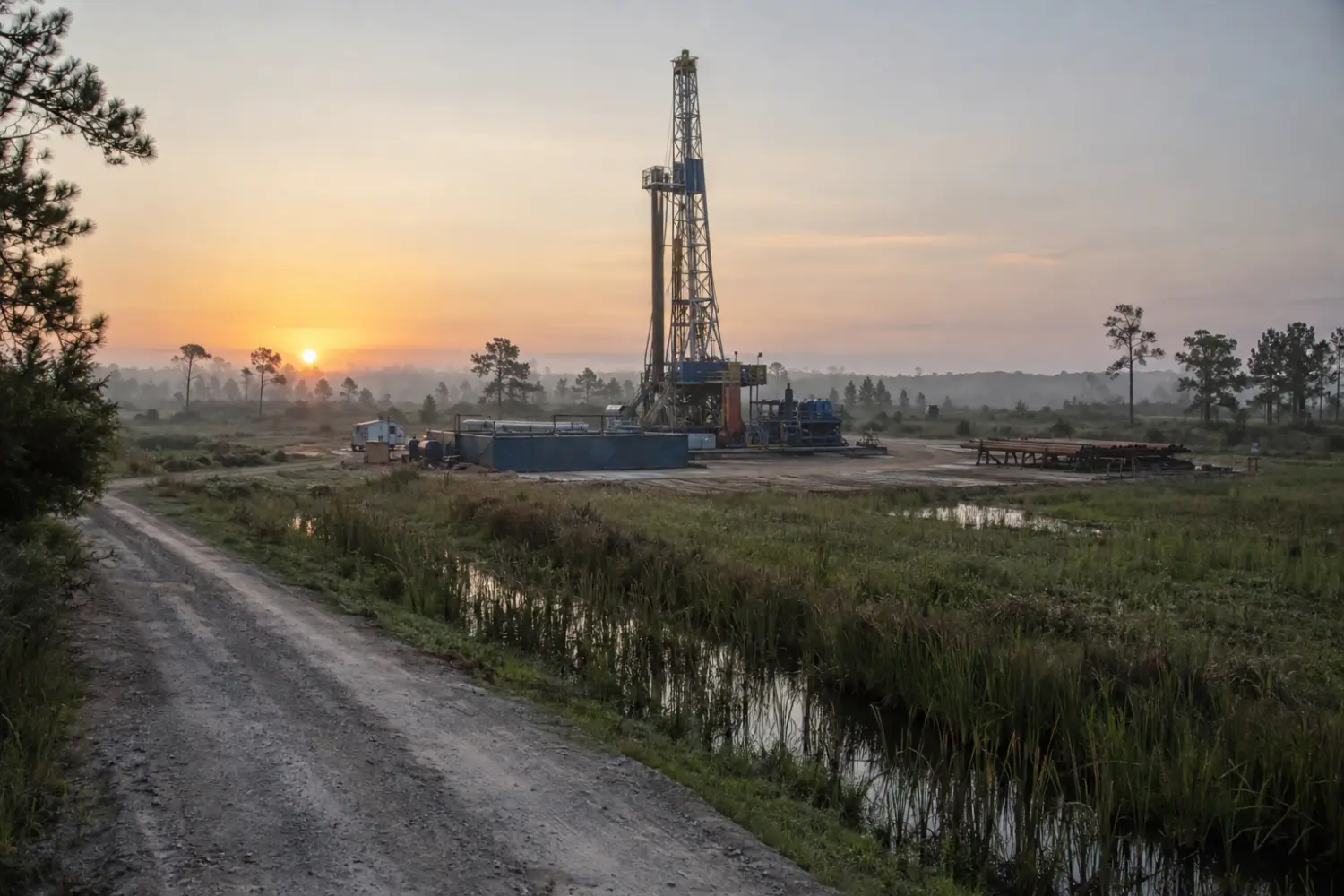
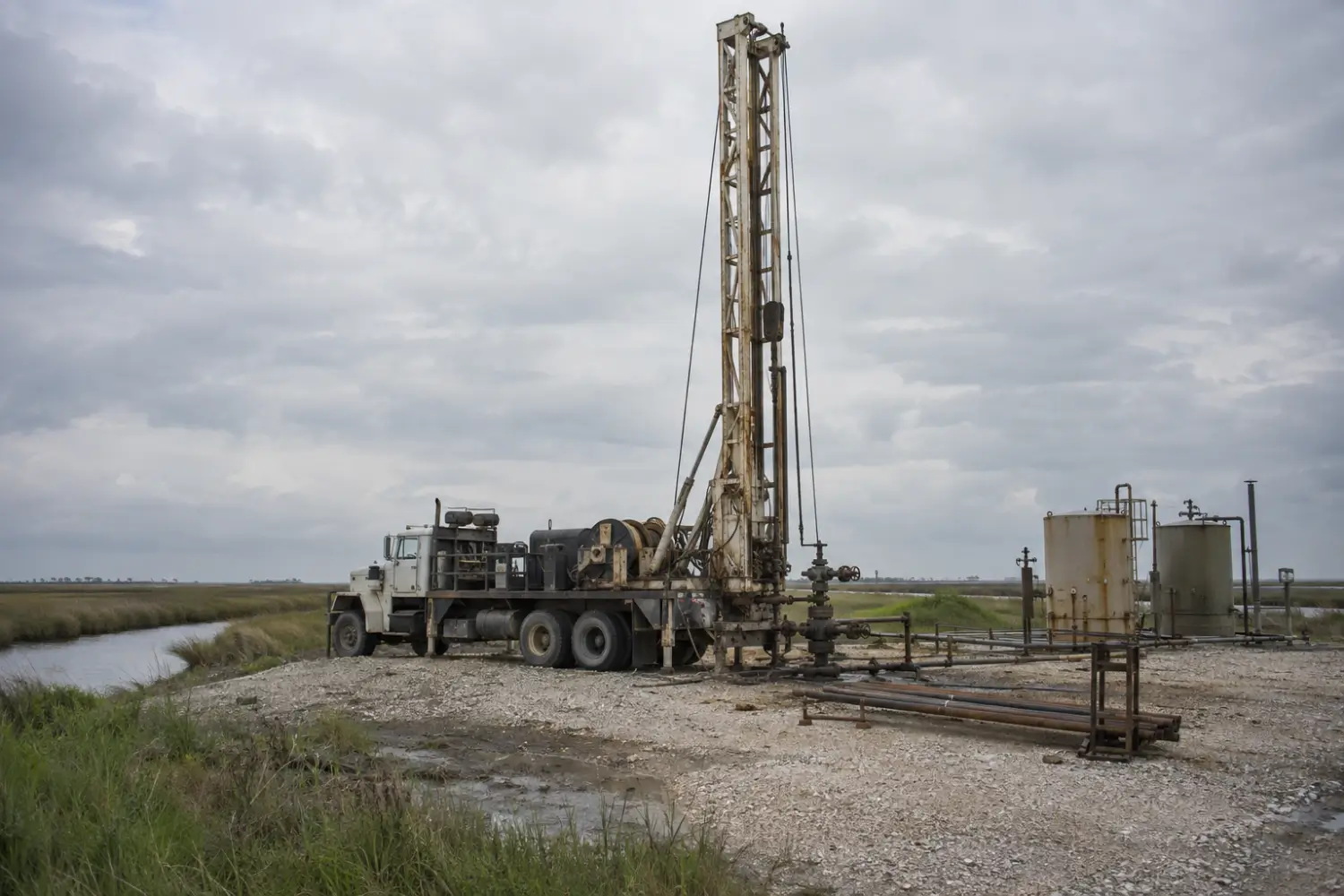
Land rigs combine heavy machinery, pressurized lines and work at height. Rig floor injuries, dropped pipe and falls from the derrick are among the oil rig accidents that happen on land. Rig workers on these jobs have the same Texas claims as anyone else in the oilfield, from workers’ compensation to a lawsuit against a different company.
Offshore rigs and maritime law
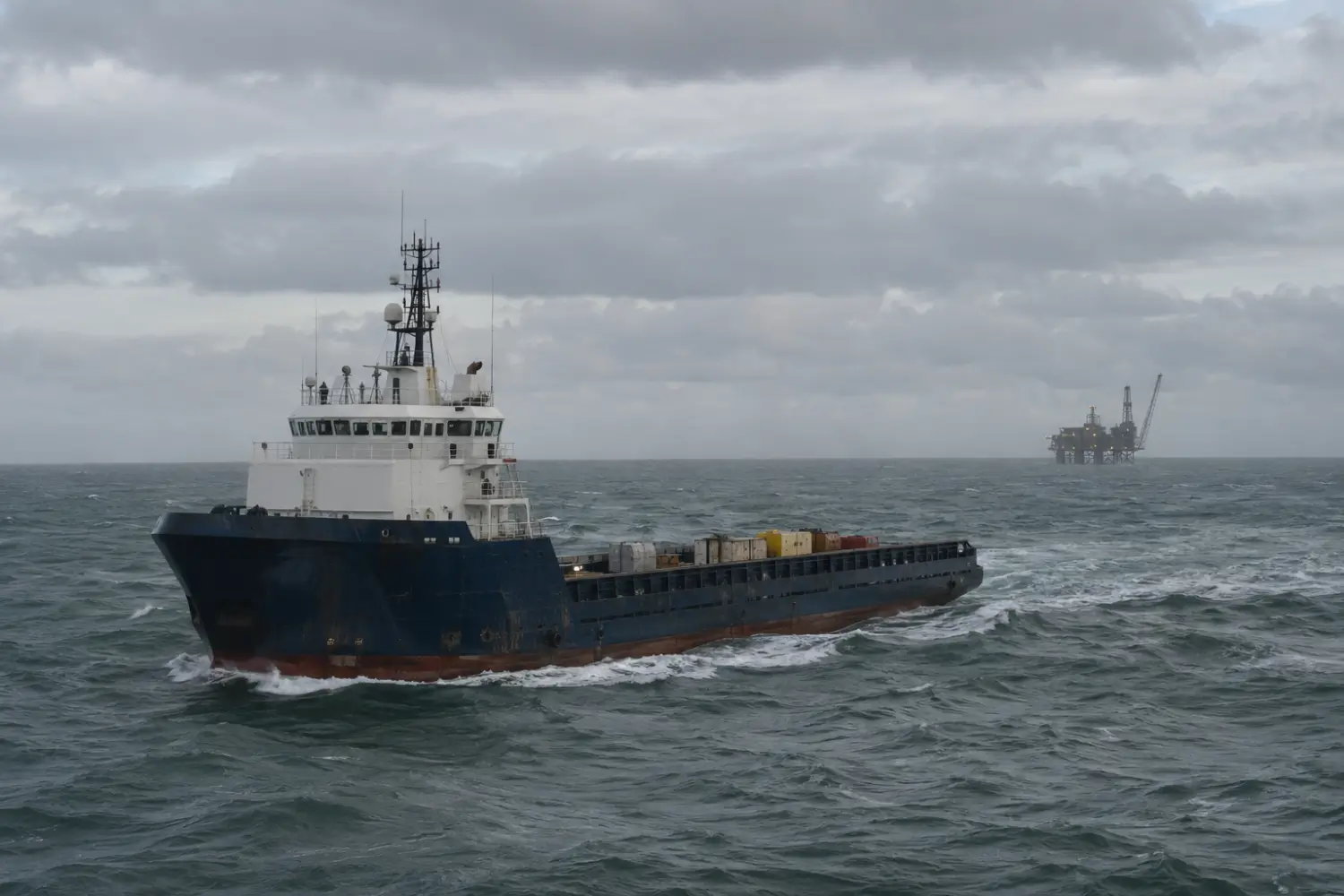
An offshore accident can fall under the Jones Act, the Longshore and Harbor Workers’ Compensation Act or other federal rules, depending on the structure and the worker’s job.
Texas also has a separate venue rule for Jones Act suits filed in state court. For some injuries outside Texas, it points the case to Harris or Galveston County. Our pages on offshore oil rig accidents and Jones Act claims cover offshore claims in depth.
Common oil field accidents and their causes
Oilfield workers across the oil and gas industry see the same accident types year after year. Catastrophic accidents can trace back to a skipped safety step or to equipment that should have been pulled from service.
Well blowouts, fires and explosions
A kick that is not controlled can become a blowout, and escaping gas can ignite. Fire can then spread through hazardous materials stored on the pad. In CDC data for 2014 to 2019, 14.5 percent of oil and gas extraction deaths came from explosions and 12.8 percent from fires. These accidents can cause severe burns and serious injuries across a whole crew.
Equipment malfunctions and heavy machinery
Equipment malfunctions cause a share of rig injuries. A blowout preventer, a pressure line, a winch or a crane can break down through a design flaw, a manufacturing defect or poor upkeep. Equipment failure on a rig can point to the manufacturer, the owner or the company that serviced it.
Oilfield truck crashes
Transportation incidents lead oilfield deaths. BLS counted 65 deaths in 2024 among operators, drillers and oilfield support companies, and 28 of them were transportation incidents. Our page on oilfield truck accidents covers who is liable for a crash on a lease road or highway.
Fracking and well completion accidents
Hydraulic fracturing puts high-pressure lines, sand and hazardous chemicals on one pad. Wells can also release hydrogen sulfide, a gas that is toxic to breathe. The fracking accidents page covers frac crew claims.
Falls and struck-by accidents
About a quarter of the industry’s worker deaths from 2003 to 2013 came from contact with objects or equipment (CDC). Workers injured on the rig floor may have been struck by swinging pipe, caught between equipment or pinned under a load. Falls accounted for 4.9 percent in the 2014 to 2019 CDC data.
Petrochemical plants and refineries
Port Houston describes the Houston Ship Channel as home to the nation’s largest petrochemical complex. The channel runs 52 miles, with more than 200 private terminals along it. Plant work there involves hazardous materials and follows different facts from well site work. Our page on Houston gas explosion injuries covers plant and refinery explosions in the Houston area, and our refinery accident page covers refinery work in general.
State-specific deadlines
Questions about how much time you have?
What injured oilfield workers face after a serious accident
Oilfield accidents cause severe injuries. The common injuries below can be permanent, and medical treatment can continue for years.
- Burns. Fires, flash explosions and chemical contact can cause burns that need surgery and skin grafts. Our page on Houston burn injuries covers these claims.
- Crush injuries. Pinned hands and limbs happen around pipe handling and heavy machinery.
- Traumatic brain injuries. A fall or a blow from equipment can cause traumatic brain injuries that affect memory and work.
- Spinal cord injuries. Falls from the derrick and vehicle rollovers can cause spinal cord injuries and paralysis.
- Overexertion injuries. Lifting, pulling and repeated strain on long shifts cause back, shoulder and spine injuries.
- Lung disease. Prolonged exposure to toxic fumes, hazardous substances and silica dust can cause illness years after the work.
These are the workplace injuries that bring medical bills and lost wages for months. A severely injured worker may never go back to the same job. Future earnings become part of the claim.
Who can be liable for an oilfield accident in Texas
Most oilfield deaths involve contractor crews. Of the oil and gas workers who died from 2014 to 2019 in CDC research, 60.4 percent worked for well servicing companies. Drilling contractors employed 17.9 percent and operators 5.1 percent.

Operators and property owners
The operator, usually the company that holds the lease, often sets the schedule and the rules for the whole site. Texas limits when a property owner answers for an injury to a contractor’s employee. The operator’s control over the work matters.
Contractors, safety protocols and inadequate training
Drilling contractors and well servicing companies run the crews where most deaths occur. Inadequate training, skipped safety protocols and short-staffed crews can show up in the records. When a new hand was put on the rig floor with inadequate training, the training file can show it.
A general contractor can also sign a written agreement to cover a subcontractor’s crew under its comp policy. Such a contract can shift who the worker is allowed to sue.
Equipment manufacturers
Workers’ comp does not bar a claim against the company that built defective equipment. An equipment failure claim turns on the design, the manufacture or the warnings that came with the machine.
Oil and gas industry deaths in Texas
Texas lost 36 of the 92 U.S. workers killed in the mining, quarrying, and oil and gas extraction sector in 2024, more than any other state (BLS). The Texas fatal injury rate in that sector was 16.8 per 100,000 full-time equivalent workers, against 3.9 for all Texas industries.
Federal safety regulations exist to protect workers from these hazards. OSHA gives an employer 8 hours to report a death on the job. A hospital admission, an amputation or the loss of an eye must be reported within 24 hours.
Those reports cover the most serious worker injuries, and they are among the first records to request. OSHA enforces worker safety rules on well sites, and two OSHA area offices, Houston North and Houston South, cover Harris County.
Financial recovery in a Texas oilfield injury claim
What a Texas oilfield accident claim can recover depends on the claim path. Workers’ compensation pays set benefits. Financial compensation from a personal injury lawsuit against a nonsubscriber or a company other than the employer can cover the full range of damages Texas law allows.
Economic and noneconomic losses
Economic losses are the costs a worker can document. They include medical expenses, future medical care, lost wages and lost earning capacity. Texas limits medical expense recovery to amounts actually paid or incurred.
Financial compensation in a lawsuit also covers noneconomic losses, meaning what an injury takes that no bill shows. Physical pain, mental anguish, physical impairment and disfigurement all count. Workers’ comp does not pay these damages.
Gross negligence and exemplary damages
Exemplary damages require proof of fraud, malice or gross negligence, and the standard is clear and convincing evidence. All jurors must agree, and a statute caps the award.
Shared fault
Texas uses proportionate responsibility. A worker more than half responsible for the accident recovers nothing. Below that line, the award shrinks by the worker’s percentage of fault. An insurance company will often argue that the injured worker carries a larger share.
Deadlines for oilfield accident claims in Texas
The clock on most Texas injury lawsuits starts on the day of the accident. The comp deadlines are shorter.

| Claim | Texas deadline |
|---|---|
| Report the injury to the employer (workers’ comp) | 30 days, with narrow exceptions (Tex. Lab. Code 409.001) |
| Workers’ comp claim with the Division of Workers’ Compensation | One year from the injury (Tex. Lab. Code 409.003) |
| Personal injury lawsuit | Two years from the injury, as a general rule (Tex. Civ. Prac. & Rem. Code 16.003(a)) |
| Wrongful death lawsuit | Two years from the death, as a general rule (Tex. Civ. Prac. & Rem. Code 16.003(b)) |
These are general rules as of September 2026, and each has exceptions. Maritime claims run on federal deadlines. An oilfield accident attorney can check each date against the facts of your case.
Steps to take after an oilfield accident in Houston
What you do in the first days protects your health and your claim.
- Get medical attention the same day. A head or internal injury can take days to show, and records made early carry weight.
- Tell your supervisor in writing. Keep your own copy with the date and the name of the person who took it.
- Write down the details. Record the time, the location, the equipment and the names of the crew.
- Photograph the site if you can. Ask that the equipment be kept as it was.
- Save the paperwork. Pay stubs, medical bills, medical records and letters from an insurer all matter.
- Wait on a recorded statement. Talk to an oilfield accident lawyer before you give one to an insurance adjuster.
When you are ready
Talk through the next step.
If a worker was killed
A family can bring a wrongful death claim when an oilfield accident takes a worker’s life. Comp does not end every claim against the employer after a death. If gross negligence or an intentional act by the employer caused it, the surviving spouse and children may seek exemplary damages. Our pages on oilfield wrongful death claims, Texas wrongful death law and our Houston wrongful death lawyers set out which relatives may bring the claim.
How Zinda Law Group helps Houston oilfield workers
Zinda Law Group is a personal injury law firm. Our personal injury lawyers represent oilfield accident victims and other injury victims across Texas.
Your case starts with a free consultation with an oilfield accident attorney. You tell us about the job and the accident. We tell you which claims look open and when each one is due. Our firm works on a contingency fee basis, so there is no out-of-pocket cost to secure the legal representation you need.
From there a personal injury attorney on the case requests the incident reports, the OSHA file and your medical records, and names every company on the site. A fair settlement is the goal once the injuries are treated and the losses are measured. If no offer reaches fair compensation, we are prepared to take the case to trial.
You deserve a full account of every company that had a hand in the accident, not just a comp check. Talk to our Houston personal injury attorneys about the next step in the legal process. Our Houston-area office is at 711 W Bay Area Blvd, Suite 285, in Webster.

John (Jack) Zinda
Founder / CEO
Over 100 years of combined experience representing injured victims across the country.
Available 24 / 7|Free Consultation
Neil Solomon
Partner
Real results matter. We do not get paid unless we win your case.
Available 24 / 7|Free Consultation